Cloth with Character: Why British Creatives Are Building Wardrobes That Tell Stories
The Fabric of Identity
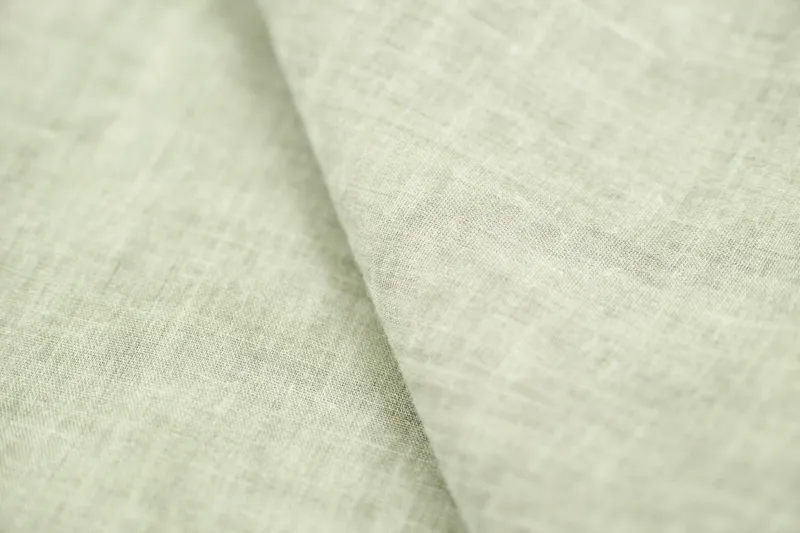
In a cramped Hackney studio, textile artist Sarah Chen holds up a piece of Italian linen so old it might have been woven by Renaissance hands. The fabric catches the grey London light, transforming it into something warmer, more forgiving. "This cloth has lived," she says, running her fingers along the grain. "You can feel the stories in it."
Chen is part of a quiet revolution sweeping through Britain's creative communities. From the converted warehouses of East London to the converted barns of the Cotswolds, artists, designers, and makers are stripping their wardrobes back to basics—specifically, to Italian basics.
Beyond the High Street Hamster Wheel
The numbers tell a stark story. The average British consumer buys 26.7kg of new clothing annually, most of it synthetic, most of it destined for landfill within two years. But walk into any creative workspace worth its salt—from the Royal College of Art's studios to Birmingham's Custard Factory—and you'll notice something different about what people are wearing.
"My wardrobe is smaller now, but it feels bigger," explains James Morton, a furniture designer whose workshop sits beneath the railway arches in Bermondsey. His daily uniform consists of three Italian linen shirts, two pairs of cotton trousers from a centuries-old Lombard mill, and a single wool jumper that cost him three months' worth of coffee money. "Every piece has weight to it, literally and figuratively."
Morton's conversion began during a research trip to Italy's Veneto region, where he discovered workshops that have been perfecting their craft since before Britain had a textile industry. "The way they spoke about fabric—as if it were alive, as if it had preferences and moods—it completely changed how I thought about what I put on my body every morning."
The Italian Difference
What makes Italian textiles so magnetic to Britain's creative class isn't just their quality—though the difference between machine-spun polyester and hand-finished linen is immediately obvious to anyone who's touched both. It's the philosophy behind the making.
In the hilltop towns of Tuscany and the industrial valleys of Lombardy, textile production remains rooted in traditions that stretch back centuries. Flax is still retted in mountain streams. Looms are adjusted by touch rather than computer algorithms. The resulting fabrics carry what Italian craftspeople call 'anima'—soul.
"When you wear something that's been made with intention, you carry that intention with you," says Dr. Elena Rossi, a cultural anthropologist at UCL who studies the intersection of craft and identity. "For creative professionals, this becomes particularly important. Their clothing becomes part of their creative toolkit."
The Ritual of Dressing
For many British creatives, the shift to Italian textiles has transformed their morning routine from a rushed grab at whatever's clean into something approaching ritual. Manchester-based ceramicist David Patel describes laying out his clothes the night before—a practice he learned from his Italian mentor during an apprenticeship in Faenza.
"It sounds pretentious, but choosing what to wear becomes part of the creative process," Patel explains. "This shirt was made by hands that understand their craft. When I put it on, I'm reminded of that standard, that attention to detail. It sets the tone for everything I make that day."
The tactile quality of natural fibres plays a crucial role. Unlike synthetic materials that create a barrier between skin and air, linen and cotton breathe. They respond to temperature, humidity, movement. They age gracefully, developing character rather than simply deteriorating.
The Economics of Intention
The financial mathematics of slow fashion initially appear daunting. A single Italian linen shirt can cost what many Britons spend on an entire high street haul. But creatives who've made the switch report a different kind of economy emerging.
"I spend less on clothing now than I did five years ago," claims Edinburgh-based graphic designer Lucy Thompson. "But the cost per wear is probably a tenth of what it used to be. These pieces last. They improve with age. They become part of your story rather than just covering your body."
Thompson's wardrobe contains just 20 pieces, each carefully chosen, most from Italian makers whose families have been in the business for generations. The oldest item—a wool coat from a Milanese tailor—is approaching its fifteenth year and, according to Thompson, "looks better now than when I bought it."
The Studio Uniform Revolution
Perhaps nowhere is this textile revolution more visible than in Britain's creative studios, where the concept of the "uniform" is being reimagined. Gone are the days when artistic credibility was measured by how paint-splattered your clothes were. Today's creative uniform is about intentionality.
"I want my clothes to disappear," says architect Helen Chang, whose London practice specialises in sustainable design. "Not because they're boring, but because they're so perfectly suited to what I need that I don't have to think about them. Italian craftspeople understand this—clothing as a tool, not a statement."
Chang's studio uniform consists of variations on a theme: Italian cotton shirts in different weights for different seasons, trousers cut from fabric woven in mills that have been operating since the Renaissance, shoes made by hands that learned their trade from previous generations.
The Ripple Effect
This quiet revolution is having effects beyond individual wardrobes. British textile mills, dormant for decades, are beginning to explore partnerships with Italian producers. Fashion schools are incorporating craft traditions into their curricula. Even high street retailers are beginning to offer "slow fashion" lines, though purists argue this misses the point entirely.
"It's not about having access to better clothes," argues textile historian Professor Margaret Sinclair of Central Saint Martins. "It's about developing a different relationship with the objects that surround us. When you understand how something is made, when you can feel the human hands in it, you treat it differently. You value it differently."
Beyond Fashion
For Britain's creative community, the embrace of Italian textile traditions represents something larger than a wardrobe upgrade. It's a rejection of the disposable culture that has dominated British life for decades. It's a return to the idea that objects can carry meaning, that craft matters, that the choices we make about the smallest details of our lives reflect our values.
As Sarah Chen in her Hackney studio puts it: "When you wear something made with love, you remember what it feels like to make something with love yourself. It's a daily reminder of the standards you want to hold yourself to."
In a world increasingly dominated by the artificial, the rush to embrace Italian textile traditions represents a hunger for the authentic. For Britain's creatives, clothing has become more than covering—it's become a manifesto, worn close to the skin.