The Ochre Awakening
In a converted warehouse in East London, ceramicist Sarah Chen holds up two bowls of what appears to be identical terracotta paint. "One comes from a tube I bought at Hobbycraft," she explains, dipping a brush into the first. "The other is ground from clay I sourced from a hillside near Siena." The difference, when applied to her latest piece, is startling. Where the commercial paint sits flat and uniform, the Italian earth seems to breathe with subtle variations—warmer here, deeper there, alive with the memory of ancient sunlight.
Chen is part of a growing movement of British artists and designers who are turning their backs on mass-produced synthetic paints in favour of pigments ground the Renaissance way: from the actual earth, stone, and plant matter of Italy. It's a practice that's as much about philosophy as it is about aesthetics, and it's quietly revolutionising studios from Glasgow to Brighton.
From Venetian Glass to Yorkshire Stone
The story begins in the workshops of 15th-century Italy, where master painters like Titian and Tintoretto created their luminous works using pigments ground from the landscape itself. Ultramarine came from lapis lazuli, vermillion from cinnabar, and the warm earth tones that define Italian Renaissance art were literally made from Italian earth.
"There's something profoundly different about working with pigment that has a geographical identity," explains Marcus Webb, a landscape painter based in the Peak District who sources his materials from a small supplier in Tuscany. "When I'm painting the moors near my studio with ochre that was formed millions of years ago in Italian hillsides, there's a conversation happening between two landscapes, two histories."
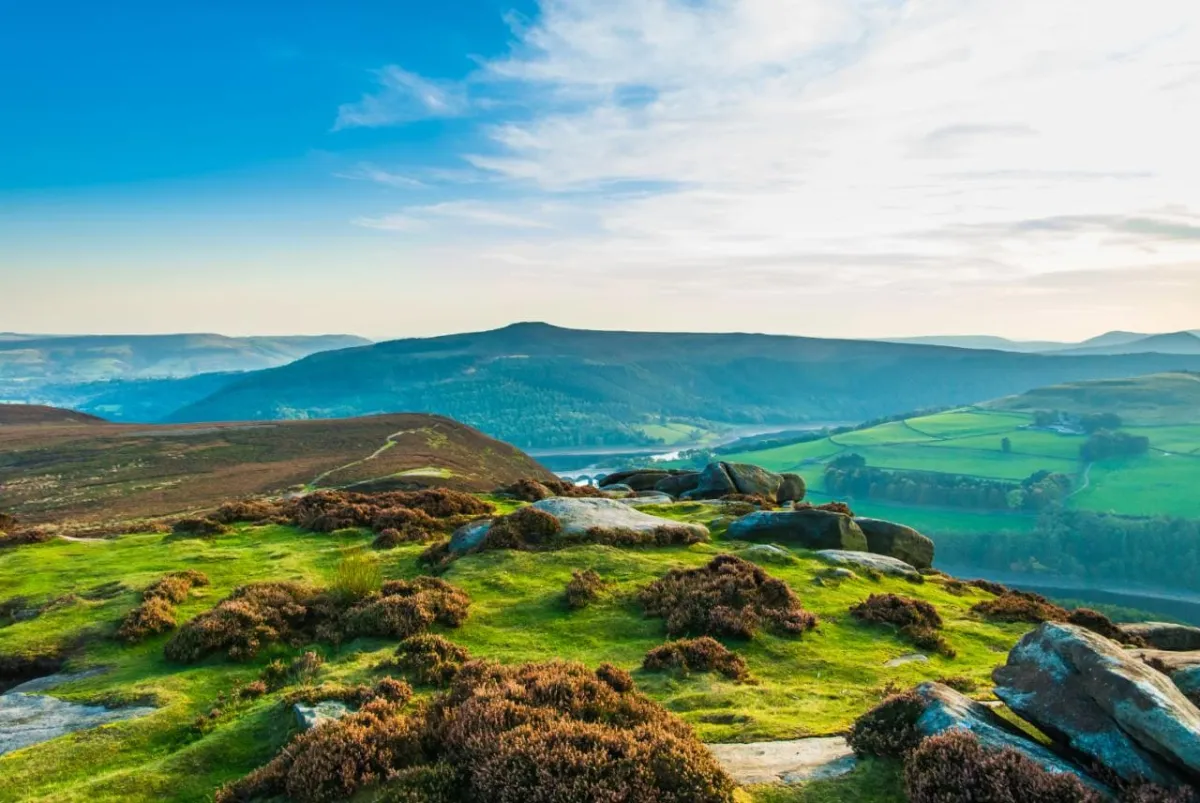 Photo: Peak District, via www.telegraph.co.uk
This isn't mere romantic notion. The mineral composition of different regions produces subtly different colours that synthetic alternatives simply cannot replicate. The iron oxides that create the famous 'Siena' colours have a complexity that comes from their geological formation—variations that mass production deliberately eliminates in favour of consistency.
The New Alchemists
Across Britain, artists are becoming their own colour merchants, learning to grind, mix, and prepare pigments using methods that would be familiar to Leonardo da Vinci. Interior designer James Morrison, whose Chelsea studio has become known for walls that seem to glow from within, describes the process as meditative.
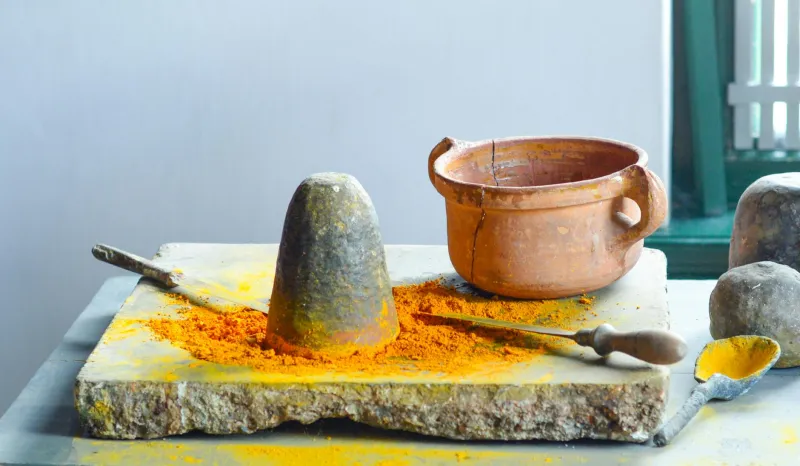
"I spend my Sunday mornings with a pestle and mortar, grinding raw umber with walnut oil," he says. "My clients initially thought I was mad, but when they see the depth you can achieve with hand-ground pigment, they understand. There's a richness you simply cannot buy in a tin."
The suppliers feeding this renaissance are often small family businesses that have operated for generations. Francesco Dolci, whose workshop near Florence has been grinding pigments since 1847, reports a 300% increase in UK orders over the past five years. "British artists understand quality," he says via video call, his hands still stained with ultramarine. "They appreciate that colour has terroir, just like wine."
Beyond the Canvas
The movement extends far beyond fine art. Fashion designer Emma Clarke uses plant-based dyes sourced from Italian herb farms to colour her sustainable textile collections. "When I dye silk with madder root from Umbria, I'm not just colouring fabric," she explains from her Brighton studio. "I'm connecting with centuries of textile tradition, with the specific soil and climate that produced that particular plant."
Architectural painter David Huang, who specialises in limewash finishes for period properties, sources his materials from the same quarries that supplied the builders of medieval Italian churches. "When you're restoring a Georgian townhouse in Bath, using pigments with that kind of provenance feels right," he says. "The colours age beautifully because they're made from materials that have already survived centuries."
The Slow Colour Movement
What emerges from conversations with these artists is something deeper than aesthetic preference. Working with traditional pigments enforces a slower, more intentional relationship with colour. You cannot simply squeeze paint from a tube; you must grind, mix, and prepare. You must understand your materials.
"It's changed how I see colour everywhere," admits textile artist Lucy Pemberton, whose tapestries now hang in several National Trust properties. "I notice the way light hits stone differently at different times of day. I see how weather affects the appearance of earth. My work has become more connected to the natural world because my materials are part of that world."
The ritual aspect cannot be understated. In an age of instant everything, the process of grinding pigment by hand creates space for contemplation, for the kind of slow thinking that feeds creativity. It's a practice that aligns perfectly with the Italian concept of 'la dolce vita'—not just the sweet life, but the considered life.
The Future of Ancient Colour
As more British artists discover the transformative power of traditional pigments, a new infrastructure is emerging to support them. Specialist suppliers are opening in London and Edinburgh, offering not just materials but workshops on traditional techniques. Art schools are beginning to incorporate pigment-making into their curricula.
"We're not trying to turn back the clock," emphasises Morrison. "Synthetic paints have their place. But for those of us seeking depth, authenticity, and a more meaningful relationship with our materials, there's something magical about working with colours that carry the memory of their origin."
In studios across Britain, artists are rediscovering what Renaissance masters knew instinctively: that the most beautiful colours come not from laboratories, but from the earth itself. And in grinding those ancient pigments, they're not just making paint—they're making history.