Fragments of Forever: How Ancient Mosaic Arts Are Giving Britain's Lost Buildings a Second Life
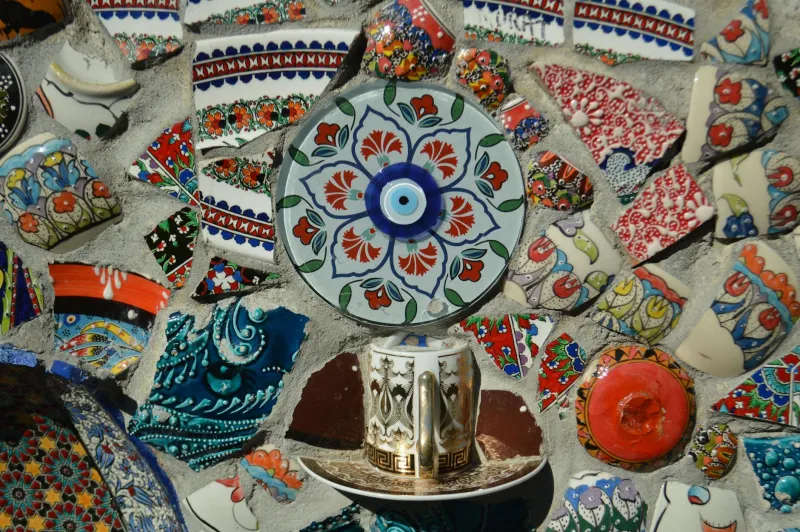
Fragments of Forever: How Ancient Mosaic Arts Are Giving Britain's Lost Buildings a Second Life
In a converted railway arch beneath Manchester's roaring Mancunian Way, Sarah Chen kneels before a growing constellation of broken things. Victorian roof tiles from a demolished Ancoats mill. Fragments of stained glass from a Methodist chapel in Hulme. Chunks of terracotta from a 1920s cinema that fell to the wrecking ball last spring. Each piece tells a story of loss, but together, they're becoming something entirely new.
"People think I'm mad, collecting all this rubble," Sarah laughs, her hands dusty with centuries-old mortar. "But when I see a Georgian townhouse being demolished, I don't see waste. I see a library being burned."
The Archaeology of Grief
Sarah is part of a growing movement across Britain's cities—makers and artists who are turning to the ancient Italian art of tessera mosaic not just as decoration, but as an act of cultural archaeology. From Bristol's harbourside warehouses to Edinburgh's New Town studios, a new generation of craftspeople are learning techniques that stretch back to Roman villa floors, applying them to fragments of Britain's rapidly disappearing built heritage.
The process is painstakingly slow. Each piece of salvaged material must be carefully cleaned, sorted by colour and texture, then cut to fit the ancient grid patterns that have guided mosaic makers for millennia. It's work that requires both the patience of a medievalmonk and the eye of a forensic investigator.
"Italian tessera work taught me to see differently," explains Marcus Webb, whose Bristol studio specialises in what he calls 'memorial mosaics'. "In Ravenna, I learned that every tiny cube of stone carries the weight of permanence. When I apply that same reverence to a piece of Edwardian bathroom tile from a demolished Birmingham back-to-back, something magical happens."
Memory Made Manifest
The workshops where this quiet revolution unfolds feel more like archaeological labs than art studios. In Edinburgh's Leith, former architect Fiona MacLeod has converted a Victorian printworks into what she calls a "fragment library"—carefully catalogued collections of salvaged materials from across Scotland's demolished buildings.
"Each piece comes with a provenance," she explains, running her fingers across a section of mosaic incorporating green glazed bricks from a demolished Glasgow tenement. "This came from Govanhill. These tiles lived in someone's bathroom for eighty years. They witnessed daily rituals, family arguments, quiet moments of reflection. When I embed them in a new work, those stories don't disappear—they become part of something larger."
The Italian influence runs deeper than technique. These makers speak of the Mediterranean concept of sprezzatura—the art of making difficult things look effortless. But they've adapted it for British sensibilities, creating works that wear their complexity lightly whilst carrying profound emotional weight.
The New Bottega Culture
What makes this movement distinctly contemporary is how it's being taught and shared. Rather than traditional master-apprentice relationships, these studios operate more like collaborative workshops. Weekend courses in "Salvage Tessera" draw everyone from retired teachers to tech workers seeking tactile antidotes to digital overwhelm.
"There's something deeply satisfying about taking something broken and making it permanent," says workshop participant David Chen (no relation to Sarah), a software developer who spends his Saturdays in Marcus's Bristol studio. "In my day job, everything can be deleted with a keystroke. Here, every decision is final, every fragment matters."
The workshops themselves become spaces of unexpected community. Stories emerge as people work—memories of childhood homes, grief for lost neighbourhoods, hope for what might be built anew. The act of handling these architectural fragments seems to unlock something primal about our relationship with place and permanence.
Beyond Aesthetics
What sets this movement apart from typical craft revival is its explicitly political dimension. These aren't nostalgic recreations of past techniques, but urgent responses to present crises. In cities where Victorian terraces fall to luxury developments weekly, where community centres are demolished for car parks, the act of preserving and repurposing these fragments becomes a form of resistance.
"Every piece of demolished building that ends up in landfill is a story we've chosen to forget," argues Fiona MacLeod. "When I incorporate fragments of Edinburgh's demolished social housing into my mosaics, I'm not being sentimental. I'm creating evidence that these places mattered, that the lives lived within them had value."
The finished works often find homes in unexpected places. A mosaic incorporating tiles from demolished Manchester mills now graces a community centre in Moss Side. Fragments of a demolished Birmingham church live on in a meditation garden in Digbeth. These aren't museum pieces but living memorials, embedded in the communities they commemorate.
The Future in Fragments
As Britain's cities continue their relentless cycle of demolition and development, this quiet army of fragment-collectors offers a different vision of progress. Their workshops and studios scattered across industrial estates and converted churches, represent more than artistic practice—they're repositories of cultural memory, guardians of stories that would otherwise be lost.
"Italian mosaic masters understood something we're only rediscovering," reflects Sarah Chen, surveying her latest commission—a memorial to Manchester's demolished Hume estate, built entirely from salvaged materials. "That permanence isn't about building things to last forever. It's about ensuring that when things do change, something essential remains."
In an age of disposable everything, these makers of memorial mosaics offer a radical proposition: that nothing truly beautiful ever needs to be lost entirely. Sometimes it just needs to be broken down, carefully tended, and rebuilt into something new.