The Invisible Muse: How Italian Fragrance Masters Are Reshaping British Creative Spaces
The Forgotten Sense
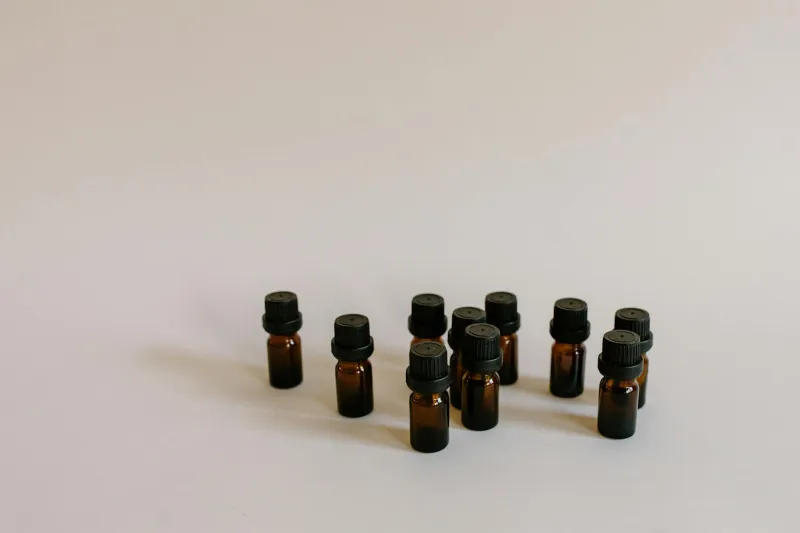
Step into any traditional Italian workshop—from a leather atelier in Florence to a ceramics studio in Deruta—and you'll notice something British creative spaces often lack: intention in the air itself. The scent of beeswax mingles with terracotta dust, lavender oil cuts through the metallic tang of tools, bergamot vapour drifts from small glass bottles positioned like sentries around workbenches.
It's a sensory landscape that British creatives are increasingly hungry to replicate, driven by a growing understanding that smell might be the most underutilised tool in their creative arsenal.
The Science of Scent and Creativity
Dr. Rachel Herz, whose research into olfactory psychology has influenced everyone from perfumers to product designers, explains why Italian craftspeople have long understood what British creatives are just discovering: "Scent bypasses the logical brain entirely. It goes straight to the limbic system—the seat of emotion, memory, and creativity. When you control the scent environment, you're essentially programming your brain for specific types of thinking."
The neuroscience is compelling. Unlike other senses that must travel through the thalamus before reaching the brain's processing centres, smell travels directly to the olfactory bulb, which connects immediately to areas responsible for emotion and memory formation. It's why the scent of your grandmother's kitchen can transport you instantly to childhood, and why Italian craftspeople have traditionally used specific fragrances to enhance different types of work.
The Florentine Formula
In the narrow streets behind Florence's Oltrarno district, generations of artisans have developed what locals call 'profumi di lavoro'—working perfumes. These aren't decorative fragrances but functional tools, as essential to the craftsperson's kit as brushes or chisels.
Rosemary for focus during detailed work. Lemon for energy during long creative sessions. Frankincense for the meditative state required for repetitive tasks. Each scent is deployed with the precision of a surgeon selecting instruments.
"The Italians understand something we've forgotten," explains aromatherapist and former fashion designer Emma Cartwright, whose North London studio now serves as a laboratory for scent-enhanced creativity. "They don't separate the sensual from the practical. For them, creating beautiful work requires engaging all the senses, not just sight and touch."
The British Awakening
Cartwright's conversion began during a residency at a traditional paper-making workshop in Amalfi, where the master craftsman would begin each day by lighting a small burner filled with local herbs. "I thought it was just atmospheric," she recalls. "Then I realised I was having my most productive creative sessions ever. The scent wasn't decoration—it was technology."
Returning to London, Cartwright began experimenting with what she calls 'olfactory choreography'—the deliberate use of scent to guide creative processes. Her studio now houses over 200 essential oils, most sourced from Italian distilleries that have been perfecting their craft since the Renaissance.
"Different creative tasks require different mental states," Cartwright explains, adjusting a small diffuser that releases the green, sharp scent of Sicilian bergamot. "Ideation needs one type of brain chemistry. Execution needs another. Scent is the fastest way to shift between these states."
The Regional Variations
Just as Italian cuisine varies dramatically from north to south, so do the country's traditional working fragrances. Venetian glassblowers have long used marine scents—salt, seaweed, the mineral smell of lagoon water—to maintain the fluid, flowing mindset their craft requires. Tuscan stoneworkers favour the earthy scents of cypress and wild herbs that mirror the landscape they're carving.
British artist James Thornton discovered this regional specificity during a ceramics residency in Umbria. "Each morning, my teacher would prepare a different blend based on what we were making that day," he recalls. "Delicate work got light, floral scents. Heavy throwing got something more grounding—cedar, patchouli, earth-based fragrances."
Back in his Margate studio, Thornton has recreated this practice, using Italian-sourced oils to create what he calls 'scent maps' for different projects. "It's like having a playlist for your nose," he explains. "Each fragrance puts me in the right headspace for specific types of making."
The Apothecary Renaissance
The growing interest in scent-enhanced creativity has sparked a renaissance in traditional apothecary skills. London's Borough Market now hosts monthly workshops on Italian distillation techniques. Edinburgh's art schools are incorporating aromatherapy into their curricula. Liverpool's creative quarter features three shops specialising in Italian botanical preparations.
Maria Santos, who runs a Sicilian-inspired apothecary from a converted railway arch in Sheffield, reports a 300% increase in enquiries from creative professionals over the past two years. "They're not looking for pretty smells," she explains. "They want functional fragrances—scents that do something, that change how they think and work."
Santos sources her materials directly from Italian producers, many of whom still use methods unchanged since medieval times. Lemon oil cold-pressed from Sorrento groves. Rosemary distilled in copper stills in the hills above Genoa. Lavender harvested by hand from high Alpine meadows.
The Ritual Element
For many British creatives, the adoption of Italian fragrance traditions has introduced a ritual element to their practice that was previously missing. The simple act of selecting and preparing a scent becomes a form of creative meditation, a bridge between ordinary consciousness and the focused state required for making.
"It's become my transition ritual," explains textile artist Sophie Williams, whose East London studio is dominated by a collection of Italian glass bottles and ceramic burners. "When I light the incense or start the diffuser, my brain knows it's time to work. The scent literally switches me into creative mode."
Williams uses different fragrances for different stages of her creative process. Initial sketching gets bright, citrusy scents that promote mental agility. Detailed work requires something more grounding—sandalwood, cedar, the resinous scents of Mediterranean pines. Final finishing work calls for florals—rose, jasmine, the complex bouquet of Italian summer evenings.
The Collaborative Element
Perhaps most intriguingly, some British creative collectives are using Italian fragrance traditions to enhance group work. The Collective, a mixed-media group based in converted brewery in Manchester, begins each collaborative session by collectively choosing a scent that will define their shared workspace.
"It creates a kind of olfactory democracy," explains member David Park. "When we're all breathing the same carefully chosen air, it somehow aligns our creative energy. We're literally on the same wavelength, or at least the same scent-length."
The practice has roots in Italian workshop traditions, where master craftspeople would use scent to create group cohesion among apprentices. Shared fragrances created shared mental states, making collaboration more intuitive and effective.
The Future of Fragrant Making
As this olfactory revolution spreads through Britain's creative communities, it's beginning to influence everything from studio design to creative education. Architecture schools are incorporating scent considerations into workspace design. Design agencies are experimenting with fragrance as a branding tool. Even co-working spaces are beginning to offer 'scent menus' alongside their coffee offerings.
"We're rediscovering something our ancestors knew instinctively," argues Dr. Herz. "The environment shapes the mind, and scent is one of the most powerful environmental factors we can control. Italian craftspeople never forgot this. Now British creatives are remembering."
In her North London laboratory, Emma Cartwright is working on what she calls the next phase: personalised scent profiles that adapt to individual creative rhythms and project requirements. "Imagine having a fragrance that evolves throughout your working day," she muses, adjusting a complex diffusion system that releases different oils at programmed intervals. "Morning scents for ideation, afternoon fragrances for execution, evening oils for reflection and planning."
It's an ambitious vision, but one rooted in centuries of Italian understanding: that creativity isn't just about what you see or touch, but about engaging every sense in the service of making something beautiful. For Britain's creative communities, the nose might just be leading the way to better work.