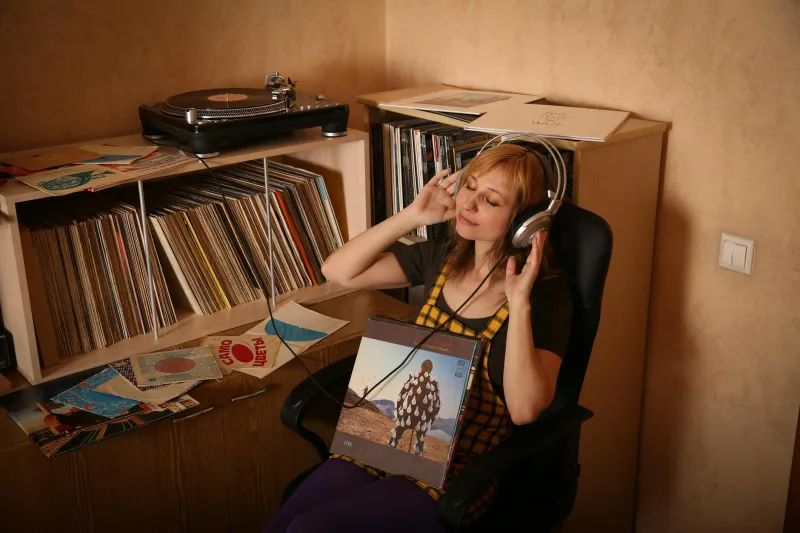
In her Islington studio, graphic designer Claire Thompson faces a deadline that would make most creatives reach for noise-cancelling headphones and a lo-fi playlist. Instead, she dims the lights and cues up Domenico Scarlatti's Sonata in D Minor. As the harpsichord's precise mathematical patterns fill the space, her design work shifts into a different gear entirely.
 Photo: Domenico Scarlatti, via www.henle.de
"I discovered it by accident," Thompson explains, pausing her work on a complex branding project. "Spotify's algorithm kept failing me—too much variation, too many surprises. Scarlatti's sonatas have this incredible consistency. They're complex enough to engage my brain but predictable enough not to distract."
Thompson has stumbled onto something that's quietly spreading through Britain's creative communities: the deliberate use of Italian Baroque and Renaissance composers as focus tools. While the rest of the world chases algorithmic ambient music, a growing cohort of British makers is finding that centuries-old Italian compositions offer superior cognitive support for sustained creative work.
The Science of Structured Sound
The phenomenon isn't mere aesthetic preference—it's rooted in neuroscience. Dr. James Kellaris, who studies music's cognitive effects at Cardiff University, explains that Baroque music's mathematical structure provides optimal background for complex mental tasks. "The predictable patterns create a kind of auditory scaffolding," he notes. "Your brain can anticipate the musical direction, freeing up cognitive resources for other work."
Italian Baroque composers like Vivaldi, Corelli, and Albinoni built their works around mathematical principles that mirror the brain's natural processing patterns. Unlike modern ambient music, which often lacks structural complexity, or pop music, which demands active listening, Baroque compositions occupy a sweet spot: sophisticated enough to prevent boredom, predictable enough to avoid distraction.
 Photo: Arcangelo Corelli, via imgproxy.mapia.io
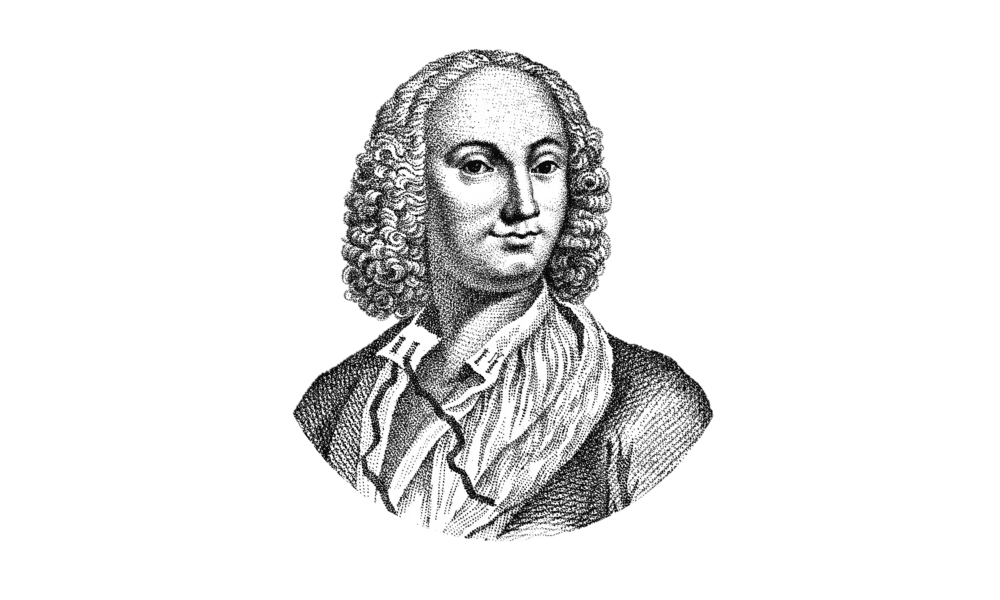 Photo: Antonio Vivaldi, via www.cmuse.org
London architect Sarah Jenkins discovered this during her final university project. Struggling with concentration in the studio's chaotic environment, she began experimenting with different musical approaches. "Everything was either too simple or too demanding," she recalls. "Then I tried Vivaldi's Four Seasons during a late-night design session. Seven hours later, I'd completed more work than in the previous week combined."
The Italian Advantage
Why Italian composers specifically? Cultural musicologist Dr. Elena Marchetti suggests it relates to the Italian approach to musical mathematics. "Italian Baroque composers were obsessed with proportion, with the golden ratio, with patterns that mirror natural phenomena," she explains from her Oxford office. "These aren't arbitrary mathematical exercises—they're musical expressions of universal structures."
This mathematical foundation creates what cognitive scientists call 'optimal complexity'—enough variation to maintain interest, enough repetition to support focus. Vivaldi's concertos, for instance, follow predictable three-movement structures while offering sufficient internal variation to prevent monotony.
Manchester-based illustrator Tom Clarke has built his entire work routine around this principle. His day begins with Corelli's concerti grossi for initial sketching, moves to Vivaldi for detailed illustration work, and concludes with Albinoni for final adjustments. "Each composer serves a different cognitive need," Clarke explains. "Corelli gets my creative juices flowing, Vivaldi sustains focus for hours, Albinoni helps me refine details."
Practical Applications
The movement extends beyond individual preference to become systematic practice. Brighton design studio Meridian Creative has replaced its open-plan playlist with curated Italian Baroque programming, cycling through different composers based on project phases. "We noticed our team's focus improved dramatically," notes creative director Lisa Park. "Fewer interruptions, longer periods of sustained work, better quality output."
The key lies in matching composer characteristics to work requirements:
Vivaldi for sustained, complex tasks requiring consistent attention—his mathematical patterns support extended focus without fatigue.
Scarlatti for detailed, precise work—his keyboard sonatas provide intricate but non-intrusive background for technical tasks.
Corelli for initial brainstorming—his more varied compositions stimulate creative thinking while maintaining gentle structure.
Albinoni for reflective, editing phases—his slower tempos and emotional depth support contemplative work.
Beyond Background Music
But this isn't simply about background ambience. London writer Rebecca Hayes describes her relationship with Vivaldi as collaborative. "I don't just play his music while writing," she explains. "I structure my work around his compositions. A blog post might follow the arc of a concerto movement—exposition, development, recapitulation."
This active engagement with musical structure reflects the Italian tradition of treating composition as architectural blueprint. Just as Renaissance architects used mathematical proportions to create harmonious buildings, Italian composers used similar principles to construct musical spaces that support rather than compete with mental activity.
Photographer David Chen has taken this further, timing his editing sessions to specific Vivaldi pieces. "The Four Seasons takes exactly 43 minutes," he notes. "Perfect for focused editing bursts. I know when Spring ends, it's time for a break."
The Anti-Algorithm Argument
The trend represents a quiet rebellion against algorithmic music curation. While Spotify's 'Deep Focus' playlists offer endless variation, Italian Baroque provides something algorithms struggle to replicate: intentional, human-crafted structure designed for sustained mental engagement.
"Algorithms optimise for engagement, not focus," observes digital wellness researcher Dr. Sarah Mitchell. "They introduce just enough novelty to keep you listening. But focus requires the opposite—predictable complexity that fades into background while supporting cognitive function."
This distinction matters increasingly as British creatives seek alternatives to digital overwhelm. The Italian Baroque approach offers what technology cannot: centuries-tested compositions designed for contemplation rather than consumption.
Building Your Italian Focus Practice
For creatives interested in exploring this approach, the key is systematic experimentation rather than random selection. Start with complete works rather than compilations—Vivaldi's Four Seasons, Corelli's Concerti Grossi Op. 6, Scarlatti's keyboard sonatas. The goal is familiarity breeding focus rather than novelty demanding attention.
Most practitioners recommend beginning with morning sessions, when cognitive resources are strongest. Glasgow ceramicist Anna Ross describes her routine: "I start each studio day with the same Albinoni adagio. By the third repetition, my hands know what to do without conscious thought."
The practice requires patience—unlike lo-fi playlists designed for immediate comfort, Italian Baroque reveals its focus-supporting qualities gradually. But for British creatives seeking deeper engagement with their work, these centuries-old compositions offer something uniquely valuable: music designed not to entertain, but to elevate the human capacity for sustained, meaningful creation.
As Thompson puts it, returning to her Scarlatti-accompanied design work: "It's like having a creative partner who never gets tired, never demands attention, but somehow makes everything you do a little bit better."