The Revolution Will Be Hand-Drawn
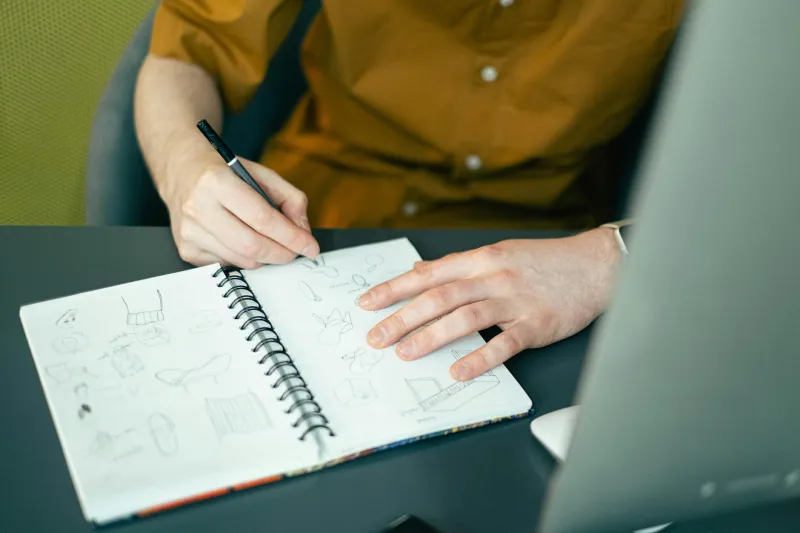
In a Shoreditch studio where screens glow like modern altars, illustrator Maya Patel performs a daily act of rebellion. Every morning, before opening her laptop, before checking emails, before diving into client briefs, she opens a weathered Moleskine and draws.
Not for Instagram. Not for clients. Not even for her portfolio. Just... draws.
"My colleagues think I'm mad," Patel laughs, flipping through pages of rough sketches, colour swatches, and half-formed ideas. "But this little book has become my most valuable creative tool. Everything good starts here."
Patel isn't alone. Across Britain's design studios, a quiet revolution is taking place – one line at a time.
The Sacred Taccuino
Italy has always understood something that Britain's efficiency-obsessed creative industries are only now rediscovering: the profound power of the personal sketchbook, or taccuino. Unlike the polished portfolios and client-ready concepts that dominate British design culture, the taccuino exists purely for exploration.
"In Italy, every artist, designer, even architect carries a taccuino," explains Dr. Giulia Rossi, who teaches design history at Central Saint Martins. "It's not about creating finished work – it's about thinking with your hands. The Italians understand that the hand knows things the mind hasn't discovered yet."
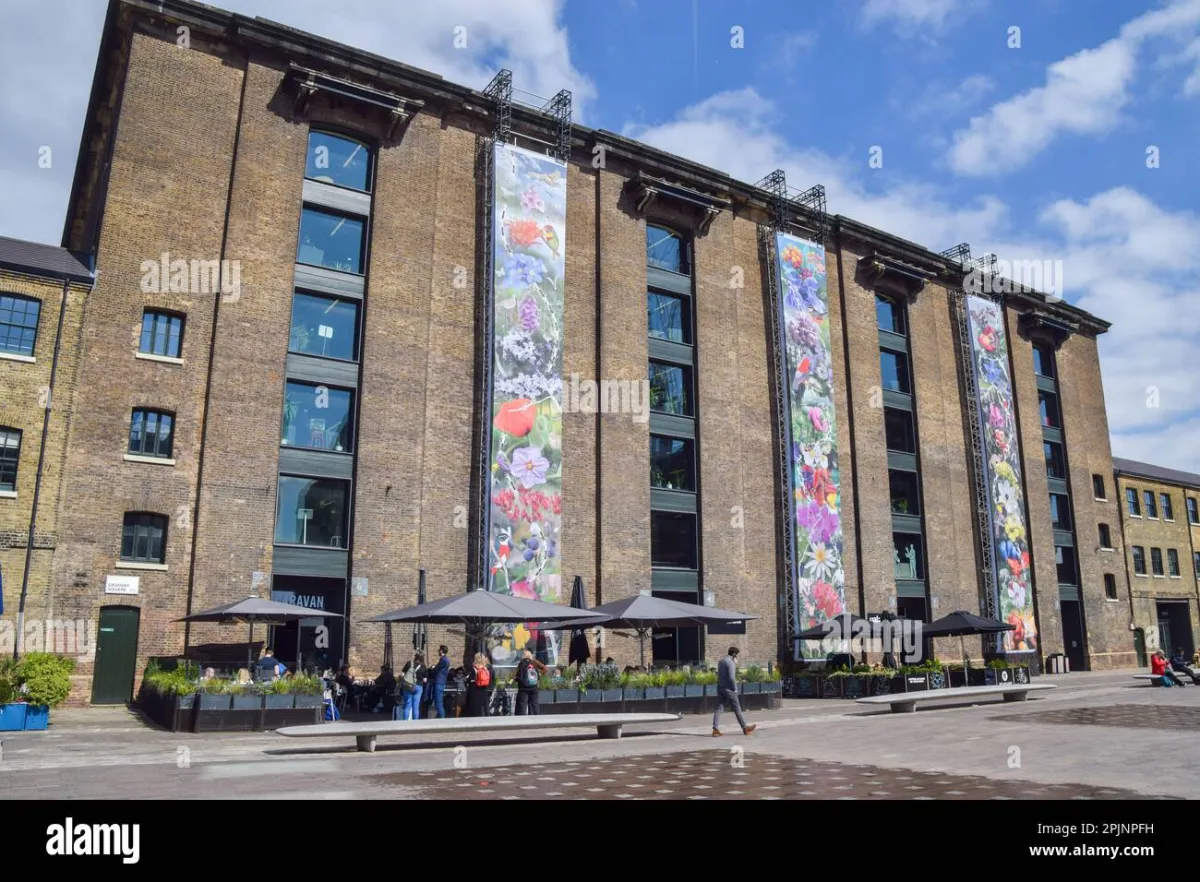 Photo: Central Saint Martins, via c8.alamy.com
This philosophy stands in stark contrast to Britain's traditionally process-driven approach to design. Where British studios have historically prized efficiency, client satisfaction, and deliverable outcomes, Italian creatives have always maintained space for what might seem, to Anglo-Saxon sensibilities, like productive procrastination.
But as AI tools flood the creative landscape and screen fatigue reaches epidemic proportions, British designers are beginning to question whether their pragmatic approach might have sacrificed something essential.
The Antidote to Algorithm
Manchester-based brand designer Tom Richardson discovered his taccuino practice during a creative crisis. After fifteen years building his reputation on sleek, digitally-native work, he found himself producing increasingly predictable solutions.
"Everything was starting to look the same," Richardson admits. "I could execute a rebrand in my sleep, but I'd lost that spark of genuine surprise. Then I spent a month in Florence, and everywhere I looked, designers were sketching. Constantly. In cafés, on buses, in meetings. It was like watching people think out loud."
Richardson returned to Manchester with a simple practice: one hour of analogue sketching before any digital work. The results were immediate and dramatic. "My work became more playful, more unexpected. Clients started asking what had changed."
The science supports Richardson's experience. Neuroscientist Dr. Claudia Aguirre's research shows that hand-drawing activates different neural pathways than digital creation, engaging areas of the brain responsible for spatial reasoning, memory formation, and creative synthesis.
"When we draw by hand, we're forced to slow down, to really observe," Aguirre explains. "The slight friction of pencil on paper, the irreversibility of each mark – these constraints actually liberate creativity by preventing the endless tweaking that digital tools enable."
Beyond Pretty Pictures
But the British taccuino movement isn't just about drawing. Edinburgh-based UX designer Priya Shah uses her sketchbook for what she calls "thinking maps" – visual explorations of complex user journeys that would be impossible to capture in Figma.
"Digital tools want you to know what you're creating before you start," Shah observes. "But the best solutions often emerge from not knowing. My sketchbook lets me get lost in the problem."
Shah's practice reflects a broader shift in how Britain's design community approaches problem-solving. Where the traditional British method emphasised research, analysis, and logical progression, the taccuino tradition encourages intuitive exploration and accidental discovery.
"Italians have always trusted the process more than the outcome," notes design critic Jonathan Bell. "British designers are learning that sometimes you have to make a hundred bad drawings to find one good idea."
The Texture of Ideas
What makes the sketchbook so powerful in an age of infinite digital possibilities? London-based type designer Sarah Kim points to the irreplaceable quality of physical mark-making.
"There's something about the texture of paper, the weight of a pencil, the way ink bleeds slightly," Kim explains, surrounded by towers of filled sketchbooks in her Bermondsey studio. "These aren't limitations – they're features. They introduce happy accidents that no algorithm can replicate."
Kim's observation touches on a crucial difference between Italian and British creative cultures. Where British design education has traditionally emphasised clean execution and client-ready presentations, Italian art schools have always celebrated the beauty of the work-in-progress.
"The British fear of showing unfinished work has cost us dearly," argues Glasgow-based creative director Mark Stevens. "The Italians understand that the sketch often contains more life than the final piece."
Slow Sketching, Fast Results
Counterintuitively, designers adopting taccuino practices report increased productivity alongside enhanced creativity. Bristol-based packaging designer Lucy Chen credits her daily sketching routine with halving her project timelines.
"I used to jump straight into digital tools and iterate endlessly," Chen explains. "Now I spend twenty minutes sketching concepts by hand first. It's like filtering ideas through my intuition before my critical mind takes over. I arrive at better solutions faster."
Chen's experience reflects what Italian design masters have always known: the hand is the fastest route between brain and paper. While digital tools require navigation through menus, layers, and interfaces, the pencil responds instantly to thought.
The Future Is Analogue
As AI tools become increasingly sophisticated, the value of distinctly human mark-making only grows. While machines excel at generating variations on existing themes, the sketchbook remains the domain of genuine originality.
"AI can create beautiful images, but it can't think," reflects Birmingham-based illustrator David Park. "My sketchbook is where I do my actual thinking. Everything else is just production."
This distinction between thinking and production is reshaping how British creatives structure their practice. Studios across the country are implementing "analogue hours" – protected time for hand-drawing before digital execution begins.
"We've created a rule: no screens until the sketchbooks come out," explains Leeds-based creative agency founder Rachel Morrison. "It's transformed not just the quality of our work, but the joy we take in creating it."
Rediscovering the Joy of Making
Perhaps most importantly, the taccuino tradition offers something that British creative culture has sometimes struggled to provide: permission to play. In a professional environment often dominated by deadlines, budgets, and client demands, the sketchbook creates space for pure experimentation.
"Italians have never forgotten that creativity is supposed to be enjoyable," observes design historian Dr. Rossi. "The British are finally learning that joy isn't frivolous – it's fuel."
As more British designers embrace the taccuino philosophy, a new creative confidence is emerging. Armed with nothing more revolutionary than pen and paper, they're rediscovering the profound satisfaction of thinking with their hands.
In a world increasingly mediated by screens and algorithms, the humble sketchbook offers something precious: a direct line from imagination to reality, one beautiful, imperfect mark at a time.