Walk through the cobbled streets of Fitzrovia on any given Tuesday afternoon, and you'll witness something quite remarkable happening behind the Georgian facades. Where once individual artists toiled away in isolation, a quiet revolution is brewing—one that harks back to the bustling workshops of 15th-century Florence.
The Renaissance Returns to W1
The bottega system that produced Michelangelo, Leonardo, and countless other masters is finding new life in London's creative quarter. These weren't simply art studios; they were collaborative ecosystems where painters worked alongside sculptors, metalworkers shared techniques with jewellers, and apprentices learned by observing masters at their craft.
Today's London interpretation maintains that spirit whilst adapting to contemporary needs. Take The Collective Workshop on Charlotte Street, where graphic designer Sarah Chen shares space with ceramic artist Marcus Thompson and textile designer Priya Sharma. "It's not just about splitting the rent," Chen explains. "Yesterday, Marcus showed me a glazing technique that completely changed how I think about colour layering in my digital work."
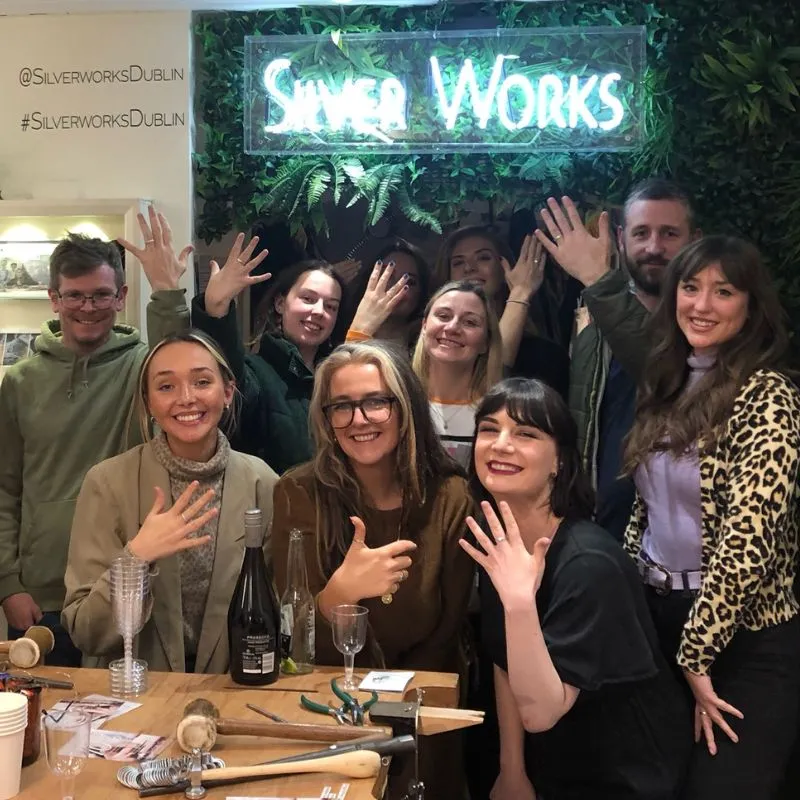 Photo: The Collective Workshop, via thecollectivedublin.ie
Breaking Down Creative Silos
This cross-pollination of disciplines represents a significant shift from the traditional British studio model, where specialisation often meant isolation. The Italian bottega philosophy embraces what we might call 'creative promiscuity'—the deliberate mixing of mediums, techniques, and perspectives.
At Forge Studios in Fitzrovia, photographer James Whitfield works alongside furniture maker Elena Rossi and fashion designer Tom Bradley. Their shared space includes a communal library, tool-sharing system, and weekly 'technique exchanges' where each resident teaches the others something from their discipline.
"The Italians understood something we've forgotten," says Rossi, whose grandfather ran a traditional bottega in Tuscany. "Creativity isn't a solo sport. It's about community, mentorship, and the magic that happens when different skills collide."
The Mentorship Renaissance
Perhaps most importantly, these new London bottega-style studios are reviving the master-apprentice relationship that once defined creative education. Unlike formal art schools, this learning happens organically, through daily observation and hands-on collaboration.
Veteran illustrator Patricia Meadows has opened her Bloomsbury studio to emerging artists, creating what she calls a "living classroom." Three junior creatives share her space, contributing to projects whilst learning professional practices. "In Florence, you didn't just learn technique," Meadows notes. "You learned how to run a creative business, how to deal with clients, how to sustain a career. That's what we're missing in traditional education."
The Post-Pandemic Creative Economy
The timing of this bottega revival isn't coincidental. The pandemic forced many creative professionals to reconsider how and where they work. Rising studio rents, the loneliness of remote work, and a growing appetite for authentic collaboration have created perfect conditions for this Italian-inspired model to flourish.
Commercial property specialist David Morrison, who's helped establish several bottega-style spaces in central London, sees this as more than a trend. "We're witnessing a fundamental shift in how creative professionals want to work. The isolation model is breaking down, replaced by something more communal, more sustainable."
Slow Making in a Fast World
The bottega philosophy also champions what Italians call 'la bella figura'—taking time to do things properly, with care and attention to craft. This resonates strongly with British creatives increasingly frustrated by the rush-to-market mentality of digital culture.
At The Atelier Collective in Marylebone, residents commit to a "slow making" approach, dedicating specific hours to experimental work without commercial pressure. "It's about rediscovering the joy of making," explains co-founder Rebecca Walsh. "The Italians never lost that connection between craft and pleasure."
The Future of British Creative Culture
As these bottega-inspired spaces multiply across London—from Shoreditch to South London—they're beginning to influence how established studios and agencies operate. Several major creative consultancies are experimenting with cross-disciplinary teams and mentorship programmes inspired by this Renaissance model.
The question isn't whether this Italian approach will continue to grow in Britain, but how quickly traditional creative industries will adapt to incorporate its principles. In a world increasingly dominated by digital interaction, the bottega offers something irreplaceably human: the messy, magical process of learning through doing, together.
For London's creative quarter, the Renaissance isn't just history—it's the future.