Secret Gardens, Serious Business: How Britain's Creatives Are Building All-Weather Outdoor Offices
When textile designer Sarah Matthews first glimpsed the overgrown corner of her Bristol garden three winters ago, she saw something her neighbours couldn't: a future studio wrapped in climbing roses, warmed by underfloor heating, and lit by skylights that would capture every precious hour of British daylight.
"Everyone thought I was mad," Matthews laughs, gesturing toward the glass-walled pavilion that now houses her loom and design table. "Building an outdoor studio in Bristol? In January? But I'd spent a month in Tuscany the previous summer, working in this incredible hidden garden space, and I couldn't shake the feeling that we were doing outdoor rooms all wrong here."
Matthews isn't alone. Across Britain, a quiet revolution is taking shape in back gardens, courtyards, and forgotten corners of creative properties. Inspired by the Italian tradition of the giardino segreto—the secret garden as a space for contemplation and serious work—British designers, writers, and makers are reimagining their outdoor spaces as year-round studios rather than seasonal afterthoughts.
The Italian Garden Philosophy Meets British Pragmatism
The concept of the garden as workspace isn't new to Italy. Renaissance artists routinely worked in outdoor studios, understanding that natural light and fresh air weren't luxuries but professional necessities. The giardino segreto served as both retreat and laboratory—a place where ideas could germinate alongside actual plants.
"Italian gardens have always been about function as much as beauty," explains landscape designer Tom Hartwell, whose London practice specialises in creative outdoor spaces. "They're outdoor rooms with specific purposes. A place to think, to work, to create. We've been treating our gardens like decoration for too long."
But adapting this Mediterranean philosophy to Britain's unpredictable climate requires serious innovation. Where Italian garden studios might rely on natural ventilation and seasonal use, British versions demand heating systems, weatherproofing, and lighting designed for our famously grey skies.
Four Seasons, One Vision
Architect Emma Chen has spent the past five years perfecting what she calls "climate-responsive garden studios" from her practice in Edinburgh. Her approach borrows heavily from Italian spatial principles but adds distinctly British solutions.
"The key is thinking in layers," Chen explains. "Your summer workspace might be completely open to the garden, but your winter configuration needs to feel equally inviting. We design spaces that can transform seasonally—retractable glass walls, modular heating, adjustable lighting systems."
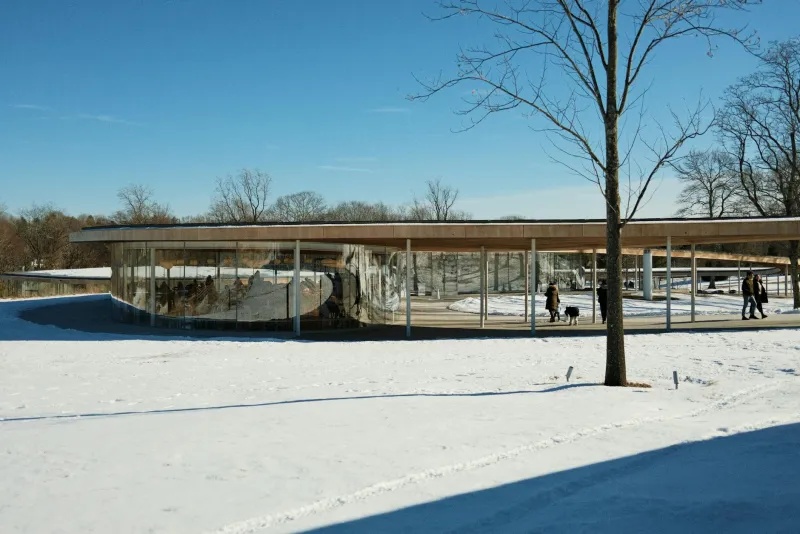
Chen's latest project, a writer's studio in the Scottish Borders, exemplifies this approach. The octagonal glass structure features automated ventilation that responds to temperature and humidity, underfloor heating powered by an air-source heat pump, and a green roof that provides insulation while maintaining the garden aesthetic.
 Photo: Scottish Borders, via fjordsandfirths.com
"In summer, it's essentially a gazebo," she notes. "In winter, it's a greenhouse for ideas."
The Psychology of Working Outdoors
The appeal goes beyond aesthetics. Recent research from the University of Surrey suggests that creative workers who spend time in natural environments show measurably improved problem-solving abilities and reduced stress levels. For Britain's increasingly isolated freelance creative community, garden studios offer something even more valuable: a daily connection to seasonal rhythms often lost in urban life.
Illustrator James Robertson discovered this accidentally when his Manchester flat's heating broke down last November. Rather than decamp to a café, he rigged up a temporary workspace in his small courtyard garden, complete with outdoor heater and weather-resistant drawing board.
"It was supposed to be a stopgap solution," Robertson recalls. "But I found myself producing some of my best work out there. There's something about the slight discomfort, the awareness of weather, the natural light—even on overcast days—that sharpens your focus."
Robertson's temporary setup has since evolved into a permanent outdoor studio, complete with a cedar-clad shelter that opens completely in summer and seals tight in winter.
Practical Principles for British Garden Studios
The most successful British garden studios share certain characteristics that distinguish them from their Mediterranean inspirations:
Climate Control Without Claustrophobia: Unlike traditional conservatories, these spaces prioritise ventilation and temperature regulation. Many feature automated systems that adjust throughout the day, maintaining comfort without sacrificing the connection to outdoor conditions.
Flexible Enclosure: The ability to open completely to the garden in fine weather while providing full shelter during storms is crucial. This often means investing in high-quality sliding glass systems or retractable walls.
Integrated Utilities: Serious outdoor studios require proper electrical systems, internet connectivity, and often plumbing. Many designers now recommend running services underground during initial construction rather than retrofitting.
Storage Solutions: British weather demands storage for cushions, equipment, and seasonal furniture. The most elegant solutions integrate storage into the structure itself—built-in benches, under-floor compartments, or dedicated equipment rooms.
The Economics of Outdoor Offices
While initial costs can be substantial—Chen's projects typically range from £25,000 to £60,000—many clients discover significant long-term savings. Working from a garden studio eliminates commuting costs and often reduces the need for expensive urban office space.
More importantly, many report dramatic improvements in work quality and client satisfaction. "There's something about meeting clients in a beautiful garden space that changes the entire dynamic," notes Matthews. "It's professional but not corporate, impressive but not intimidating."
Beyond the Novelty
As remote work becomes permanently embedded in British professional culture, garden studios represent more than a pandemic-inspired trend. They offer a sustainable alternative to the spare-bedroom-office, providing proper separation between work and home life while maintaining the flexibility of working from home.
The Italian influence runs deeper than aesthetics. Like the Renaissance masters who understood that environment shapes creativity, today's British designers are discovering that working closer to the natural world doesn't mean sacrificing professionalism—it means enhancing it.
As Matthews puts it, gazing out at her winter garden from behind the warm glass of her studio: "I used to think outdoor working was about good weather. Now I realise it's about good design. And maybe that's the most Italian lesson of all—that beautiful, functional spaces aren't accidents. They're intentions made real."