Sketching the Streets: Why Britain's Creatives Are Rediscovering the Lost Art of Urban Drawing Walks
The Renaissance Walker's Secret
In the narrow cobbled streets of Florence, where Brunelleschi once wandered with charcoal in hand, a centuries-old tradition is quietly making its way across the Channel. The passeggiata con disegno – literally 'walk with drawing' – represents far more than a casual stroll with a sketchpad. It's a deliberate practice of observation, a form of visual meditation that Italian masters have used for generations to understand the bones of their cities.
Now, British creatives are discovering what their Renaissance counterparts knew instinctively: that the act of drawing whilst walking creates a unique form of urban literacy. Unlike photography, which captures a moment, or digital note-taking, which records thoughts, sketch-walking creates a physical dialogue between artist and environment that transforms both observer and observed.
London's New Flaneurs
Every Thursday evening, a small group gathers near Borough Market, armed with nothing more than pocket sketchbooks and well-worn walking boots. They're part of London's emerging sketch-walk movement – creative professionals who've traded their evening commutes for structured drawing routes through the capital's most characterful neighbourhoods.
 Photo: Borough Market, via lifeinwanderlust.com
"There's something almost archaeological about it," explains Sarah Chen, a graphic designer who founded the Southwark Sketchers group. "When you're forced to slow down and really look – to translate what you see into marks on paper – you notice details that have been hiding in plain sight. The way Victorian brick meets modern glass, the rhythm of shop fronts, the gestures people make whilst waiting for buses."
The practice differs markedly from traditional urban sketching, which often involves finding a good spot and settling in for an extended drawing session. Sketch-walking maintains momentum, encouraging quick gestural captures that prioritise impression over accuracy. It's about building a visual vocabulary of place rather than creating finished artworks.
The Edinburgh Experiment
In Edinburgh, architect James MacLeod has developed what he calls 'architectural ambulatory drawing' – structured walks that follow the city's geological and historical layers. His routes wind from the medieval Old Town down through Georgian New Town, with participants documenting how different eras of building respond to Scotland's dramatic topography.
"Italian hill towns taught me that cities aren't just collections of buildings," MacLeod explains. "They're conversations between human intention and natural landscape, played out over centuries. When you walk and draw simultaneously, you start to hear that conversation."
His sketch-walkers have uncovered visual patterns invisible to casual observation: how Edinburgh's closes create natural wind tunnels that influenced door design, how the city's famous grey stone shifts colour throughout the day, how medieval street layouts still dictate modern traffic flows.
Bristol's Creative Cartographers
Perhaps nowhere has the sketch-walk tradition taken more creative hold than in Bristol, where the city's famous street art culture has inspired a new generation of walking artists. The Bristol Drawing Society runs monthly 'mural meanders' – routes that weave between established street art and architectural details, encouraging participants to document both sanctioned and guerrilla creativity.
"Banksy taught us that Bristol's walls are canvases," says local illustrator Tom Weatherby. "But sketch-walking reveals that the whole city is a canvas. Every doorway, every junction, every view between buildings is composed like a piece of visual art."
The society's members have created an informal map of the city's 'drawing hotspots' – locations where architectural details, natural lighting, or urban juxtapositions create particularly rich sketching opportunities. These spots often become meeting points for creative collaboration, transforming solitary artistic practice into community building.
Building Your Own Practice
Creating a personal sketch-walk routine requires nothing more than curiosity and commitment to regular observation. Italian tradition suggests starting with familiar routes – your journey to work, the walk to your local shops – and gradually expanding to explore neighbourhoods that exist outside your usual patterns.
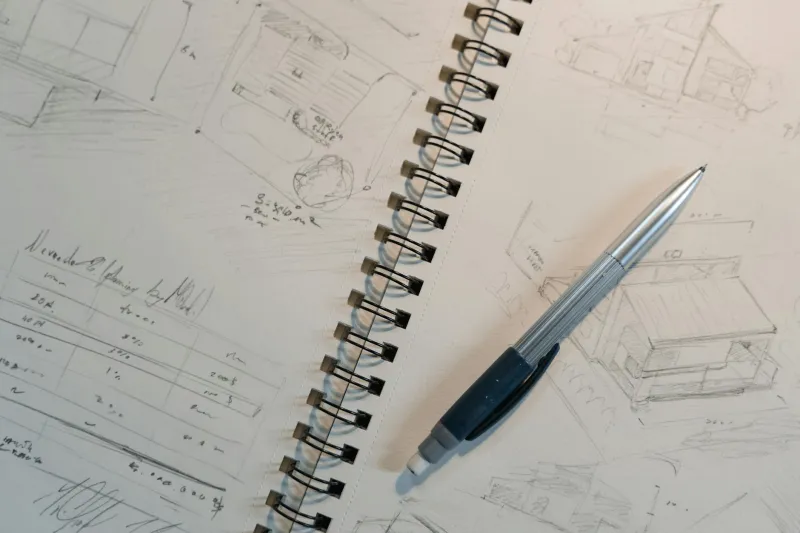
The key lies in constraint rather than ambition. Choose a specific route length (twenty minutes is ideal for beginners), carry minimal equipment (a small sketchbook and single pen), and focus on quantity rather than quality. The goal isn't to create gallery-worthy drawings but to develop what Italian artists call 'occhio educato' – the educated eye that sees beyond surface appearances.
The Deeper Current
What makes sketch-walking particularly relevant for contemporary British creatives is its resistance to digital overwhelm. In an era when inspiration increasingly arrives pre-packaged through social media feeds and Pinterest boards, the practice offers direct, unmediated engagement with place and community.
The drawings themselves become secondary to the walking, the observation, and the slow accumulation of visual knowledge that can't be googled or downloaded. It's a practice that builds creative confidence from the ground up, literally and figuratively.
As winter evenings draw in and British cities prepare for their most atmospheric season, perhaps it's time to follow the Italian example. Pocket your phone, pick up a pencil, and discover what your feet and eyes can teach you about the places you thought you already knew.