The Long Game: Why Britain's Best Creatives Are Choosing Depth Over Diversification
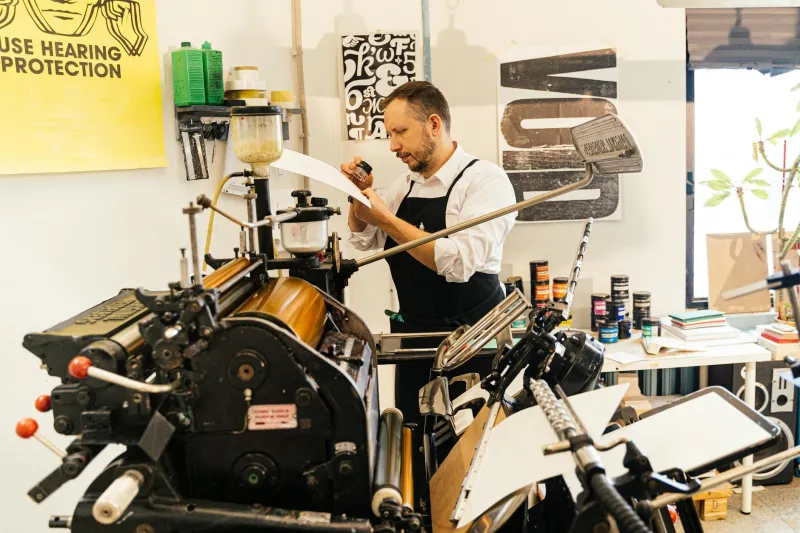
In a cramped workshop above a fishmonger's in Margate, bookbinder Lucy Pemberton is doing something radical in 2024: the same thing she did in 2014, 2004, and every year since she left art school. While her contemporaries pivot from illustration to UX design to content creation, Pemberton continues to fold, stitch, and bind books by hand, one signature at a time.
"People think I'm mad," she admits, gold leaf catching the afternoon light as she works. "They're always asking when I'll branch out, start an online course, maybe do some graphic design on the side. But I've seen what happens to people who try to be everything to everyone. They burn out, and their work becomes generic."
Pemberton's approach—unfashionable as it might seem in our multi-hyphenate economy—echoes a tradition that has sustained Italian craftspeople for centuries: the patient mastery of a single discipline over decades, rather than the restless pursuit of the next opportunity.
The Myth of the Creative Generalist
Britain's creative industries have drunk deeply from the Silicon Valley gospel of disruption and diversification. Art schools now teach "creative entrepreneurship" alongside traditional skills. Freelancers are encouraged to develop "portfolio careers" spanning multiple disciplines. The very term "creative" has become a catch-all for anyone who makes things, regardless of their actual expertise.
This generalist approach, while seductive in its promise of flexibility and financial security, may be doing more harm than good. A recent study by the Creative Industries Federation found that 73% of British freelance creatives report feeling "professionally scattered" and struggle to command premium rates for their work.
"We've created a culture where depth is seen as limiting rather than liberating," argues Dr. Elena Rossi, who studies craft traditions at Central Saint Martins. "But if you look at Italy's most successful creative exports—from furniture design to fashion—they're built on generations of specialists who understood their materials, their techniques, their markets intimately."
The Italian Model of Mastery
In Murano, glassblowers still spend seven years as apprentices before they're allowed to touch molten glass. Florentine leather workers often inherit techniques passed down through five generations. These aren't romantic anachronisms—they're highly profitable businesses that command global respect precisely because of their uncompromising focus.
The Italian approach to creative careers rests on a fundamental assumption that British creatives have largely abandoned: that true expertise takes decades to develop, and that this expertise becomes more valuable, not less, as markets become saturated with generalists.
"When everyone can do a bit of everything, the person who can do one thing extraordinarily well becomes invaluable," notes craft historian James Wright, whose book 'The Patient Hand' examines traditional making practices across Europe.
British Creatives Embracing the Long Game
A small but growing number of British creatives are consciously choosing depth over breadth, often inspired by time spent working alongside Italian masters. The results, both financially and creatively, are compelling.
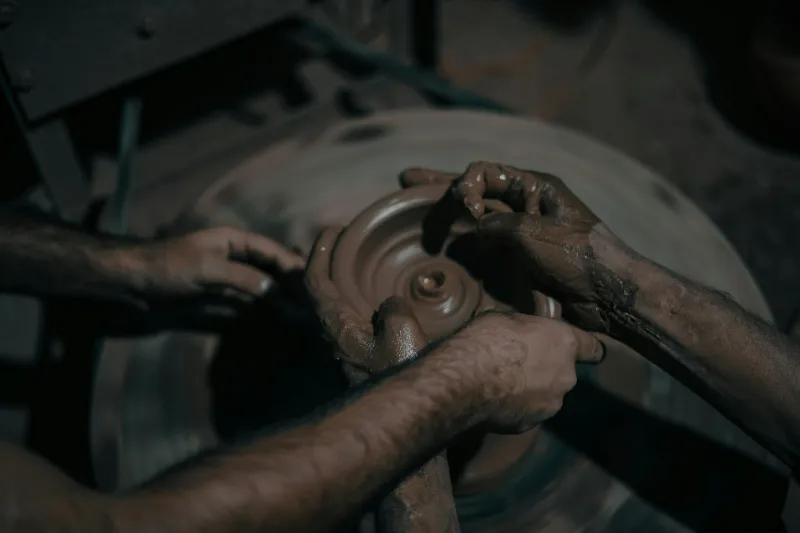
Ceramicist David Mellor left a promising career in product design five years ago to focus exclusively on wheel-thrown pottery. Initially, friends worried he was limiting his opportunities. Today, his waiting list stretches 18 months, and his pieces sell for prices that would make many graphic designers weep with envy.
"I spent my twenties trying to be a designer who could do everything—packaging, web, illustration, a bit of ceramics on the side," Mellor recalls from his Derbyshire studio. "I was constantly stressed, constantly learning new software, constantly competing on price. Now I make pots. Just pots. And I'm booked solid."
Mellor's transformation wasn't accidental. After a residency in Faenza—Italy's ceramic capital—he witnessed firsthand how Italian potters built sustainable careers around deep expertise rather than broad capabilities.
"There was this 70-year-old master potter who had been making the same basic forms for forty years," he remembers. "But the subtlety, the refinement, the absolute confidence in every gesture—you can't get that from a YouTube tutorial. It takes decades."
The Economics of Expertise
The financial case for specialisation is stronger than many British creatives realise. While generalists compete primarily on price and availability, specialists compete on quality and unique capabilities. This shift in competitive dynamics often translates to significantly higher day rates and more stable client relationships.
Textile artist Hannah Mitchell discovered this when she stopped accepting graphic design projects and focused entirely on hand-woven fabrics. Her hourly rate tripled almost immediately.
"When I was a generalist, clients saw me as interchangeable," Mitchell explains. "There are thousands of people who can design a logo. But there are maybe fifty people in Britain who can weave the kind of complex structures I specialise in. Scarcity has its own value."
Mitchell's client base has also evolved in ways she didn't anticipate. Instead of competing for budget-conscious small businesses, she now works with luxury fashion houses and interior designers who specifically seek out her expertise.
The Psychological Benefits of Mastery
Beyond the economic advantages, many specialists report significant improvements in job satisfaction and creative fulfillment. The constant pressure to stay current with rapidly evolving tools and trends—a hallmark of generalist creative work—is replaced by the deeper satisfaction of incremental mastery.
"There's a meditative quality to doing the same thing deeply," notes furniture maker Tom Harrison, who abandoned a portfolio career spanning carpentry, interior design, and property development to focus exclusively on handmade chairs. "Each project builds on the last. You're not starting from scratch every time."
Harrison's workshop in the Yorkshire Dales operates on principles borrowed directly from traditional Italian botteghe. He takes on only a handful of commissions each year, often spending months on a single piece. His chairs sell for thousands of pounds and have waiting lists measured in years.
Redefining Creative Success
The specialist approach requires a fundamental redefinition of creative success. Instead of measuring progress through diversification or rapid growth, specialists track their development through increasingly subtle refinements and deeper client relationships.
"Success used to mean saying yes to everything," reflects Pemberton, the bookbinder. "Now it means knowing what to say no to. I turn down probably 80% of the work that comes my way because it doesn't align with what I do best."
This selectivity, paradoxically, has made Pemberton more successful, not less. Her books are now collected by major libraries and private collectors. She commands fees that seemed impossible when she was trying to be a general 'paper artist.'
The Counter-Revolution Begins
As Britain's creative industries mature, there are signs that the tide is turning toward specialisation. Art schools are beginning to emphasise depth over breadth in their curricula. Some creative agencies are hiring specialists rather than generalists. Even clients are beginning to value expertise over versatility.
"We're seeing a backlash against the jack-of-all-trades mentality," observes creative recruiter Sarah Chen. "Clients are tired of working with people who do everything adequately. They want to work with people who do one thing extraordinarily well."
This shift represents more than a trend—it's a return to the fundamental principles that built Italy's creative reputation over centuries. The patient development of expertise. The pride in craft. The understanding that true innovation comes not from chasing every new opportunity, but from pushing the boundaries of what's possible within a chosen discipline.
As Mellor puts it, shaping clay on his wheel with the confidence that only comes from years of practice: "Everyone wants to be the next big thing. But maybe the real opportunity is becoming the best version of what you already are."