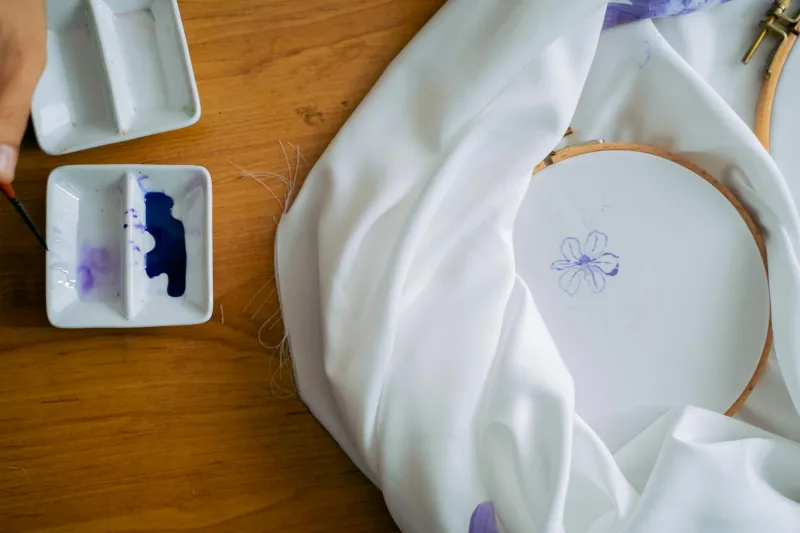
In a converted Victorian warehouse in Hackney, textile artist Rosa Blackwood sits surrounded by damaged garments—torn jeans, moth-eaten jumpers, frayed shirt cuffs. But instead of discarding them, she's transforming each flaw into something extraordinary using techniques that trace back centuries through Italian villages. Her needle moves in patterns learned from Venetian lace masters, creating intricate repairs that celebrate rather than hide the damage.
"This isn't about making things look new again," Blackwood explains, holding up a jumper where a cigarette burn has become the centre of an elaborate floral motif inspired by Sicilian ricamo. "It's about creating a new language for how we value things, how we see beauty in imperfection, and how we slow down in a culture obsessed with speed."
Blackwood is part of a growing movement of British textile artists who are turning to Italian regional mending traditions—not as museum pieces to be preserved, but as living practices that offer radical alternatives to contemporary design culture's relentless pace.
The New Archaeology of Making
Across the UK, from Edinburgh's Old Town to Bristol's creative quarter, textile studios are becoming laboratories for cross-cultural craft revival. These aren't heritage centres or nostalgic workshops, but contemporary creative spaces where ancient Italian techniques are being reimagined for modern British contexts.
London-based designer Kieran O'Sullivan discovered Sardinian pibiones embroidery during a research trip to Cagliari. The technique, traditionally used to create textural patterns resembling grains of rice, has become central to his sustainable fashion practice. "I was struck by how this centuries-old technique could transform industrial textile waste into something precious," he says, showing samples where discarded denim scraps have been elevated through intricate stitching.
O'Sullivan's studio now runs workshops teaching pibiones to other designers, but with a distinctly contemporary twist. Instead of traditional motifs, participants create patterns inspired by London's urban landscape—tube map networks rendered in tiny stitches, architectural details translated into textile texture.
Beyond Visible Mending
What distinguishes this movement from the visible mending trend that swept social media is its deeper philosophical foundation. While Instagram-friendly patches often prioritise aesthetic impact, these Italian-inspired practices emphasise the meditative, restorative nature of the work itself.
"Venetian punto tagliato isn't just a technique—it's a way of thinking about time and attention," explains Dr. Marina Santini, a textile historian at Central Saint Martins who has documented the migration of Italian needlework traditions into British contemporary practice. "When you're working in these traditions, you can't rush. The work teaches patience, precision, and a different relationship with material."
This emphasis on process over product is proving particularly appealing to British creatives burned out by the demands of fast-turnaround design work. Manchester-based collective Slow Stitch Society has built an entire practice around what they call "contemplative mending," drawing on techniques from across Italy's regions.
Regional Techniques, Local Materials
The most innovative practitioners aren't simply copying Italian methods, but adapting them to British materials and contexts. Yorkshire textile artist Emma Hartwell has developed a contemporary interpretation of Ligurian sprang that works specifically with the rough wool produced by local hill farms.
"Traditional sprang creates this incredible stretched, net-like fabric," Hartwell explains, demonstrating the ancient technique of creating fabric through twisting rather than weaving. "But when I apply it to Yorkshire wool, with its particular texture and memory, something completely new emerges. It's neither Italian nor traditionally British—it's something else entirely."
Similarly, Glasgow-based studio Threadbare has adapted Abruzzese tombolo lace techniques to work with recycled plastic fibres, creating delicate lacework from waste materials that would otherwise end up in landfill. The juxtaposition—ancient bobbin lace techniques applied to thoroughly modern environmental challenges—exemplifies how this movement operates.
The Economics of Slow
What makes this renaissance particularly significant is how it's challenging conventional business models in British creative industries. Traditional fashion and textile design operates on seasonal cycles, trend forecasting, and rapid production. The Italian mending traditions these artists are embracing operate on entirely different timescales.
"A single piece might take weeks or months to complete," notes Birmingham embroiderer Sarah Chen, whose work draws heavily on Umbrian whitework traditions. "That seems impossible in a market that expects constant newness. But what we're discovering is that there's real hunger for objects that carry this kind of time investment, this visible care."
Chen's pieces sell for prices that reflect their labour intensity—a transformed vintage coat might cost £800, positioning handmade mending as luxury rather than economy. This pricing strategy is enabling sustainable livelihoods for practitioners while educating consumers about the true cost of careful craft.
Teaching Ancient Futures
The knowledge transfer happening in British studios goes beyond technique to encompass entire ways of working. Italian mending traditions emerged from cultures of scarcity, where materials were precious and disposal unthinkable. Contemporary British practitioners are finding these values increasingly relevant as environmental concerns reshape creative practice.
"When I'm teaching Sicilian ricamo, I'm not just teaching stitches," explains London workshop leader David Martinez. "I'm teaching a completely different relationship with materials, with time, with the idea of finished versus ongoing work. Students often say it changes how they see everything—not just textiles, but their whole approach to making."
The workshops themselves become sites of cultural exchange, where Italian diaspora community members share knowledge with British-born practitioners, creating new hybrid traditions that reflect contemporary multicultural Britain.
The Radical Potential of Repair
What emerges from this cross-cultural textile revival is more than aesthetic or even environmental—it's fundamentally political. In a consumer culture built on planned obsolescence and disposability, the act of elaborate repair becomes subversive.
"Every time we choose to mend rather than replace, we're making a statement about value systems," argues textile theorist Dr. James Bridle. "When that mending draws on traditions that predate industrial capitalism, that emphasise community knowledge and intergenerational skill transfer, it becomes even more radical."
The movement's practitioners are increasingly explicit about these broader implications. Edinburgh's Mend & Make Collective positions their Italian-inspired workshops as "acts of resistance against throwaway culture," while London's Repair Café Network has begun incorporating traditional European mending techniques into their community events.
Stitching New Stories
As this renaissance continues growing, what's emerging isn't simply revival of old techniques, but creation of new creative languages that blend Italian wisdom with British innovation. The most successful practitioners aren't preserving traditions in amber, but allowing them to evolve through contact with contemporary contexts.
The result is work that feels both ancient and urgent, rooted in centuries of accumulated knowledge yet perfectly suited to addressing present challenges around sustainability, mental health, and creative fulfilment.
In Blackwood's Hackney studio, surrounded by garments bearing beautiful scars, the future of British textile practice is being stitched one careful thread at a time. Each repair tells a story—not just of damage and restoration, but of cultures meeting, traditions adapting, and creativity finding new ways to honour both heritage and innovation.
The revolution, it turns out, happens one stitch at a time.