The Alchemy of Authentic Shine
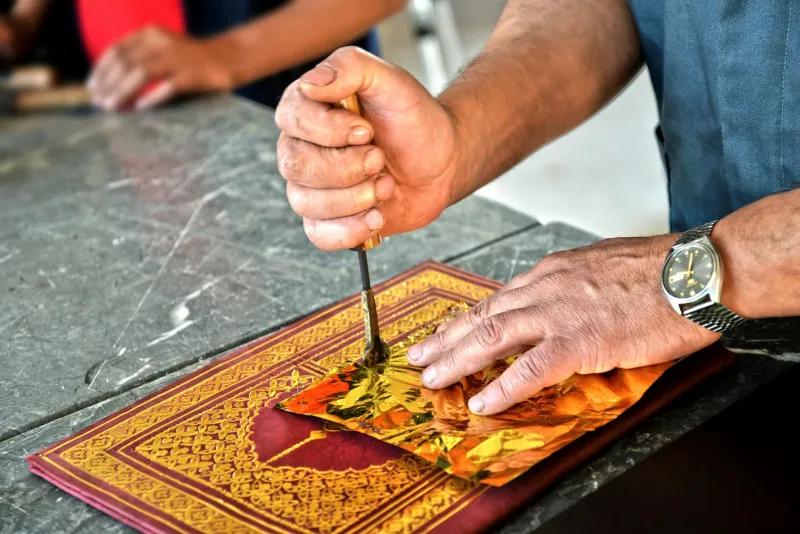
In a converted Victorian workshop in Margate, Lucy Pemberton holds a sheet of 23-carat gold leaf so delicate it trembles with her breath. This gossamer-thin metal, beaten to just four millionths of an inch thick, represents more than luxury — it's the culmination of techniques refined in Florentine workshops over five centuries.
Pemberton is part of a quiet renaissance happening across Britain's independent design scene. While mass production floods the market with synthetic gold finishes and spray paints, a growing network of craftspeople is returning to the painstaking, magical art of traditional gilding.
"There's no comparison," Pemberton explains, her fingers stained with the red bole clay that forms the foundation of water gilding. "Machine-applied metallic finishes reflect light uniformly. Real gold leaf catches and holds it, creating this living, breathing surface that changes throughout the day."
Ancient Techniques, Modern Applications
The revival isn't driven by nostalgia but by a hunger for authenticity in an increasingly digital world. Interior designers across the UK are rediscovering how traditional Italian gilding techniques can transform contemporary spaces.
James Hartley runs a decorative arts studio in Bath where he teaches both water and oil gilding methods passed down through generations of Venetian masters. "Water gilding allows you to burnish the gold to an incredible mirror finish," he demonstrates, running an agate stone across a freshly laid section. "Oil gilding is more forgiving but gives you that warmer, matte glow."
His students include furniture restorers, picture framers, and increasingly, contemporary artists seeking to incorporate precious metals into their practice. "We had a sculptor from Leeds last month learning to gild bronze castings. A ceramicist from Cornwall working on a installation for Tate St Ives. The applications are limitless."
 Photo: Tate St Ives, via media.tate.org.uk
The Ritual of Preparation
True Italian gilding begins long before the gold appears. Pemberton's process starts with gesso — a mixture of rabbit skin glue, chalk, and titanium white that must be applied in precise layers, each sanded smooth before the next.
"Gesso isn't just preparation," she explains, running her palm across a surface that feels like silk. "It's the foundation that determines how the gold will behave. Rush this stage and your leaf will never properly adhere."
The next layer, bole, comes in shades from deep red to warm yellow, each affecting the final tone of the gold. "Venetian gilders favoured red bole because it gives the gold more warmth," notes Hartley. "Florentine workshops often used yellow for a cooler, more austere effect."
This preparation can take days. In our instant-gratification culture, the patience required becomes part of the appeal.
Beyond Frames: Contemporary Applications
While traditional picture framing remains the most common application, British creatives are pushing gilding into unexpected territories. Interior designer Sophie Chen has incorporated water-gilded panels into a Notting Hill townhouse, creating accent walls that seem to glow from within.
"My clients wanted something that felt precious but not ostentatious," Chen explains. "Traditional oil gilding would have been too flashy. Water gilding on yellow bole gave us this subtle luminosity that changes completely as you move through the room."
Furniture maker David Morrison in Edinburgh has built his reputation around pieces that combine traditional Scottish woodworking with Florentine gilding techniques. "I'm not trying to recreate Renaissance furniture," he clarifies. "I'm using those skills to enhance contemporary designs. A chest of drawers with gilt details isn't historical pastiche — it's craftsmanship dialogue."
The Economics of Excellence
Real gilding isn't cheap. A single book of 25 leaves costs around £60, and might cover just two square feet depending on the technique. But for discerning clients, the investment represents something deeper than decoration.
"My gilded pieces hold their value differently," observes Morrison. "When someone understands the process — the weeks of preparation, the skill required, the fact that this gold will outlast generations — they see it as patrimony, not just furniture."
Pemberton has found demand growing among younger collectors who've grown tired of fast fashion interiors. "They want pieces with stories, with presence. You can't fake the way real gold leaf catches afternoon light streaming through Georgian windows."
Learning the Language
Traditional gilding requires fluency in a vocabulary most modern makers have forgotten. Burnishers made from agate, bloodstone, or hematite. Gilder's tips — brushes so soft they're made from badger hair. Size — the adhesive that must reach perfect tackiness before leaf application.
"Each tool has been refined over centuries," explains Hartley, demonstrating how different burnishing stones create subtly different finishes. "You can't rush the learning process. Your hands need to understand how the materials behave."
His weekend workshops fill months in advance, drawing participants from across Europe. "We had a group from a London design studio last month. They'd been specifying 'gold' finishes for years without understanding the difference between leaf and paint. Watching them discover real gilding was like seeing someone taste wine after years of drinking grape juice."
The Meditative Craft
Beyond technique, traditional gilding offers something increasingly rare: enforced slowness. The process cannot be hurried. Size must reach perfect tack. Bole must cure completely. Gold leaf demands patience, focus, and acceptance that some attempts will fail.
"It's become my meditation," admits Pemberton, who started gilding during lockdown as an escape from screen-based design work. "You can't think about emails when you're laying leaf. The present moment is all that matters."
This mindful quality attracts creatives seeking alternatives to digital culture's relentless pace. "My students often say the workshops feel like time travel," observes Hartley. "For eight hours, they're working with their hands, following techniques unchanged since Donatello's workshop. It's profoundly grounding."
Golden Futures
As Britain's creative economy grapples with automation and artificial intelligence, traditional crafts like gilding offer something irreplaceably human. "Machines can apply metallic finishes," concludes Morrison. "But they can't make decisions about where to burnish, how to handle an imperfection, when to embrace the beautiful accident that makes a piece unique."
The Italian masters who developed these techniques understood gold's power to transform not just objects but spaces — and the people who inhabit them. In capable British hands, that ancient wisdom is finding new expression, one delicate leaf at a time.