Painted Quiet: The Monastery Colour Secrets That Could Transform Your British Studio
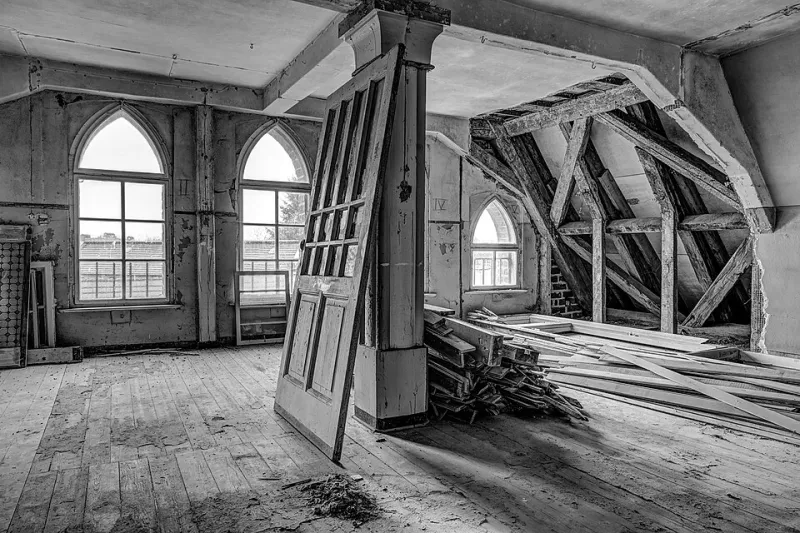
Photo: Dietmar Rabich, CC BY-SA 4.0, via Wikimedia Commons
Walk into the right Italian monastery and something happens to you almost immediately. The noise in your head softens. Your breathing slows. You become, without quite meaning to, more present. Most visitors attribute this to architecture or atmosphere — the stone floors, the proportions, the absence of screens. But look more closely at the walls, and you'll find a different explanation waiting in the pigment itself.
For centuries, Italian monastic communities were among the most sophisticated colour theorists in Europe — not out of aesthetic ambition, but out of practical necessity. They needed their spaces to work.
Colour as a Cognitive Tool
The connection between colour and mental state isn't a modern discovery. Benedictine, Dominican, and Franciscan communities across Italy developed nuanced, room-specific approaches to interior pigment that were driven by function rather than fashion. The scriptorium — where monks copied manuscripts and engaged in sustained intellectual work — was typically finished in cool, muted tones: soft ochres, chalky limestone whites, and the palest of mineral blues. These were colours chosen to reduce visual fatigue and sustain concentration over long hours.
Refectories, where communities gathered to eat and converse, were warmer — terracotta, amber, and the deep earthy reds that characterised so many Italian interiors. These pigments encouraged sociability and a gentle openness. Chapels and prayer spaces often employed the deepest tones: indigo, charcoal, the bruised purples of lapis lazuli diluted to near-grey. These were colours of interiority, designed to turn the gaze inward.
What's striking about this tradition is how deliberately anti-decorative it was. These weren't choices made to impress visitors. They were choices made to shape the quality of thought in a room.
What Britain's Creative Spaces Are Getting Wrong
Walk into most British creative studios today and you'll find one of two dominant approaches. The first is the white-box aesthetic — everything bleached to neutral in the belief that blank space is somehow neutral for the mind. It isn't. Stark white environments create a kind of visual tension that many people find subtly exhausting over time, particularly in the grey-lit conditions of a typical British working day.
The second approach is the Instagram-inflected bold colour moment — a single saturated wall in terracotta or sage green, chosen primarily for how it photographs. This is closer to the monastic instinct, but it's applied without the underlying logic. A fashionable colour in the wrong room, for the wrong kind of work, doesn't help. It just looks good in content.
What's missing in both cases is intentionality — a considered relationship between the colour of a space and the cognitive demands of the work that happens inside it.
The Mineral Palette: Where to Begin
The monastic tradition offers a practical starting point through what we might call the mineral palette — pigments derived from earth, stone, and plant matter that share certain qualities: depth without brightness, warmth without aggression, and a surface texture that changes with natural light rather than fighting against it.
These are colours that breathe. And they're increasingly available through specialist UK suppliers who stock traditional lime-based and clay paints that replicate the texture and behaviour of historic Italian pigments far more faithfully than standard emulsion ever could.
For deep-focus work areas, look toward the cooler end of the mineral range: pale celadon, soft limestone, greyed sage, or the chalky blue-green of aged fresco. These tones recede visually, reducing the sense of enclosure and allowing the mind to settle into sustained attention. In a British context — where natural light is often limited and precious — these colours reflect rather than absorb, keeping a space feeling open even on the flattest January afternoon.
For collaborative and conversational zones, the warmer mineral tones earn their place: raw sienna, warm sand, the faded terracotta of a Tuscan wall that's seen forty summers. These colours invite a different kind of engagement — more expansive, more social, more generative. If your studio has a meeting corner or a shared making table, this is where the warmth belongs.
For reflection and planning spaces — a reading chair, a journalling corner, a wall beside which you think through problems — consider the deeper tones. Charcoal clay, storm-grey limewash, or the muted plum of a mineral-rich pigment. These aren't dramatic choices in execution; they're quietening ones. They create a sense of interiority that encourages slower, deeper thinking.
Practical Steps for British Studios
A full studio repaint isn't always possible — rented spaces, shared offices, and the general realities of British creative life mean that many of us are working with constraints. But the monastic principle doesn't require a complete renovation. It requires a starting point and a clear intention.
Begin with a single wall in your primary work area. Choose a mineral or clay-based paint in a muted, earthy tone — Earthborn, Bauwerk, and Lick all offer ranges worth exploring — and apply it to the wall you face most often when working. Pay attention to how the quality of your focus shifts over a fortnight. The change is rarely dramatic; it's more like a quiet settling.
Consider also what's on the walls. The monks understood that visual complexity competes with cognitive clarity. A monastic scriptorium wasn't bare, but it was selective. Fewer, more meaningful objects on a thoughtfully coloured wall will almost always serve your creative practice better than a gallery-hung collection of inspiration that becomes invisible through familiarity.
Finally, think about how your colour choices interact with the light you actually have — not the light in a paint chart photograph. Hold sample cards at different times of day, in your actual space, under your actual conditions. A colour that sings in Tuscan afternoon light may whisper or disappear entirely under a British overcast sky. That's not a failure — it's information.
The Quiet Revolution
The most radical thing about the monastic colour tradition isn't its antiquity. It's its insistence that the spaces where we think and make are worth taking seriously — not as backdrops for our work, but as active participants in it.
In an era when British creatives are increasingly questioning the open-plan, screen-heavy, always-on conditions of contemporary studio life, the Italian monastery offers something genuinely useful: a centuries-old argument that the right colour on the right wall, chosen for the right reason, can change the quality of everything that happens in front of it.
That's not mysticism. That's design intelligence. And it's been waiting, pigment-deep, in Italian walls for the better part of a millennium.