Colour as Language: What Renaissance Map-Makers Knew About Visual Data That British Designers Are Only Just Rediscovering
Photo: Txllxt TxllxT, CC BY-SA 4.0, via Wikimedia Commons
There's a map in the Biblioteca Medicea Laurenziana in Florence that stops visitors in their tracks. Not because of its geographical accuracy — by modern standards, it's wildly off — but because of its colour. Every shade applied to that 15th-century parchment was chosen with intention. Ochre didn't just fill landmass; it communicated fertility and wealth. Deep lapis blues weren't decorative; they carried spiritual and navigational weight. The map wasn't just showing you where things were. It was telling you what they meant.
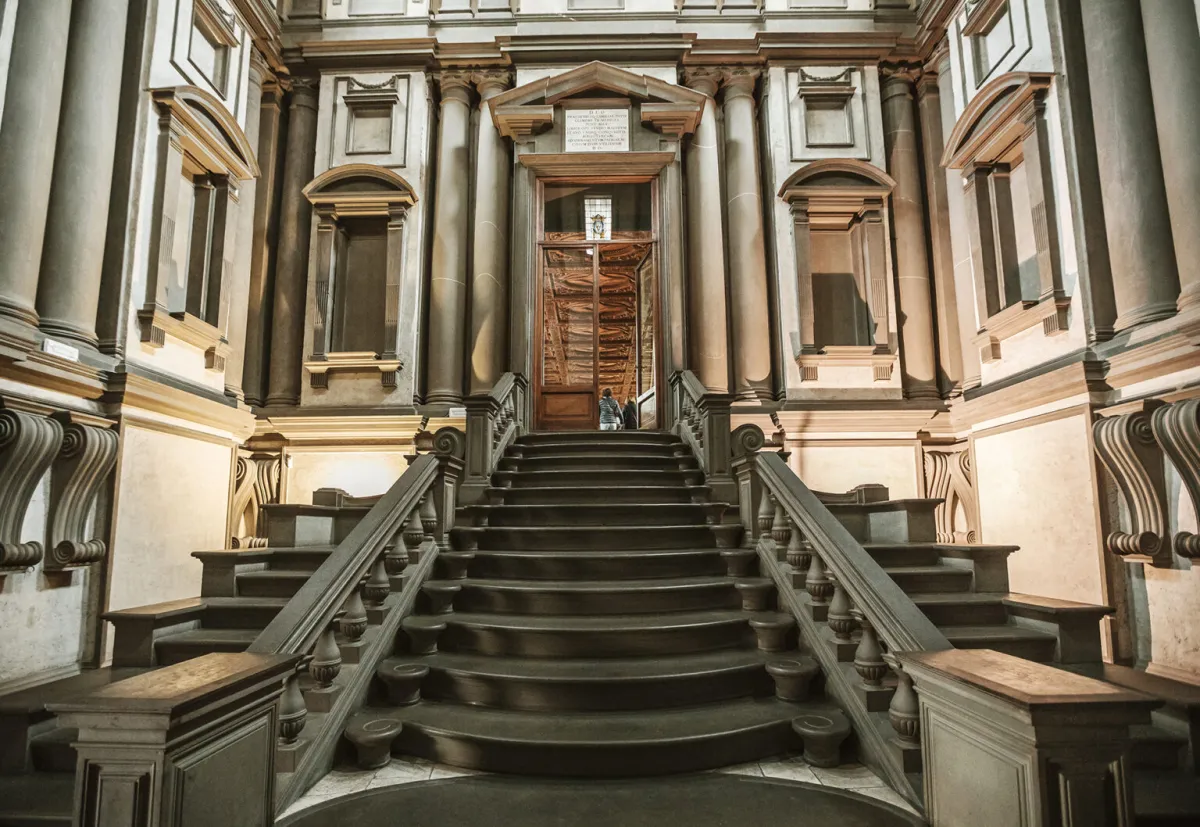 Photo: Biblioteca Medicea Laurenziana, via www.enflorencia.com
Fast-forward five centuries, and Britain's data visualisation community is sitting with a rather uncomfortable realisation: for all our tools, dashboards, and real-time analytics platforms, we've largely forgotten how to make data feel like something.
The Cartographic Colour System You've Never Heard Of
Renaissance Italian cartographers — particularly those working in Florence, Venice, and Genoa during the 14th to 16th centuries — operated with something modern data designers would recognise as a style guide. Colour wasn't applied intuitively or aesthetically. It was codified. Specific pigments carried assigned meanings that were understood across workshops, across commissions, and across generations.
Gold leaf denoted imperial or ecclesiastical authority. Verdigris greens marked cultivated lands and places of abundance. Muted earth tones signalled uncertainty — regions the cartographer knew existed but couldn't confirm. Even the quality of pigment mattered: cheaper mineral colours were used for peripheral regions, while expensive ultramarine from lapis lazuli was reserved for the seas that mattered most to trade routes.
This wasn't arbitrary. It was a visual grammar — a shared language between maker and reader that allowed enormous complexity to be communicated without a single written word.
Where Modern Data Went Wrong
Somewhere between the invention of the spreadsheet and the rise of the infographic, colour in data visualisation became functional rather than meaningful. Choose a palette that's accessible. Make sure the contrast ratio passes WCAG guidelines. Pick something that fits the brand. These are all entirely reasonable concerns — but they've quietly pushed out a deeper question: what do these colours say?
The result, as any creative working in data design will quietly admit, is a landscape of technically correct but emotionally inert visuals. Charts that communicate numbers but not narrative. Dashboards that inform but don't move. Infographics that explain but never resonate.
Studio practitioners across the UK are starting to push back.
The British Studios Bringing Back Symbolic Colour
A small but growing number of independent UK studios are consciously drawing on historical cartographic principles to inject more intentionality into their colour choices.
In Edinburgh, one independent data studio has been developing what its founders call a "territory palette" — a bespoke colour system for each client project that assigns specific emotional and contextual values to every hue before a single chart is built. Warm ambers are mapped to growth and momentum. Cooler greys carry uncertainty or transition. Deep navy signals authority and depth. The system, they say, was directly inspired by time spent studying Venetian portolan charts — the extraordinary navigational maps produced by Italian sailors that combined extreme practical precision with deeply symbolic visual language.
In Bristol, a freelance infographic artist working primarily with environmental charities has been experimenting with what she calls "honest ochres" — a palette derived from actual Italian earth pigments that she argues communicates ecological data with a groundedness that digital colours simply can't replicate. Her work for a recent rewilding campaign used a palette so rooted in the physical landscape being discussed that viewers consistently reported feeling connected to the data rather than merely informed by it.
These aren't nostalgic experiments. They're practical responses to a very real problem: data fatigue. When audiences are drowning in information, the studios finding cut-through are often those making colour do more of the storytelling.
Five Principles Worth Stealing From the Renaissance Cartographers
If you're a UK creative looking to bring more intentionality to your visual communication work, here are five principles drawn directly from Italian cartographic tradition that are worth keeping close.
Assign meaning before you assign colour. Before you open a colour picker, write down what each data category represents emotionally and contextually. Urgency? Stability? Uncertainty? Let that meaning lead your colour choice rather than following it.
Reserve your most expensive colour. Renaissance cartographers saved their finest pigments for what mattered most. In your work, identify the single most important data point or narrative thread and give it your most visually powerful colour. Everything else should support it.
Use restraint as a signal. Muted, desaturated colours in historical maps often indicated peripheral or uncertain information. Consider using lower-saturation tones for supporting data and richer, more saturated hues for your core message.
Build a legend that tells a story. Cartographic legends weren't afterthoughts — they were introductions to a visual language. Treat your colour key as a short narrative that primes the reader before they engage with the data itself.
Test for emotional response, not just readability. Show your work to someone unfamiliar with the data and ask them how it makes them feel before asking what they understand. The gap between those two answers is where your colour work needs to happen.
The Bigger Picture
There's something quietly radical about looking at a 500-year-old map and seeing the future of data design. But perhaps that's the point. The Renaissance cartographers weren't working with less than we are — they were working with different constraints, and those constraints forced them to make every colour choice count.
In an era when data is everywhere and attention is scarce, that kind of intentionality isn't a historical curiosity. It's a competitive advantage.
Britain's creative community has always had a gift for finding new uses for old ideas. The studios currently reaching back to Italian cartographic tradition aren't retreating from the present — they're equipping themselves to communicate within it more powerfully. One deliberate colour at a time.