The Accidental Meeting: How the Italian Piazza Is Quietly Rebuilding Britain's Creative Cities
The Accidental Meeting: How the Italian Piazza Is Quietly Rebuilding Britain's Creative Cities
Every creative professional has a version of the same story. The commission that came from a conversation at a coffee machine. The collaboration that began with a chance remark on a staircase. The client relationship that started because two people happened to be waiting for the same lift. The best professional connections, almost universally, begin by accident.
This is not coincidence. It is, if you look at it through the right lens, design.
What the Piazza Actually Was
The Italian piazza tends to get romanticised into a postcard — sun-dappled cobblestones, a fountain, old men playing cards. What gets lost in the prettiness is the extraordinary social intelligence behind the form. The great piazzas of Italian cities were not accidental clearings. They were the result of deliberate urban thinking, shaped over generations to produce a very specific kind of human behaviour: the productive, unplanned encounter.
The positioning of a piazza within a city was calculated. It needed to sit at the intersection of multiple routes — not at a destination, but on the way to things. The surrounding buildings were arranged to create a sense of enclosure without confinement, drawing people to linger rather than pass through. The presence of water, shade, seating, and food vendors wasn't incidental; each element extended the amount of time a person might reasonably spend in the space, and therefore the probability of meeting someone they hadn't planned to meet.
The piazza was, in the language of contemporary urban design, a collision generator. It didn't bring people together for a purpose. It created the conditions in which people would inevitably, repeatedly, and productively collide — and then left the rest to human nature.
For creative communities, that distinction is everything.
Why Formal Networking Keeps Failing
Britain's creative industries spend considerable energy on networking. Events, panels, mixers, curated introductions, LinkedIn connections, alumni evenings. The infrastructure of professional connection is vast and well-funded. And yet most creative professionals, if pressed, will admit that their most valuable professional relationships didn't begin at any of these occasions.
The reason is structural. Formal networking is a destination activity. You attend it. You perform a version of yourself within it. You leave. The social dynamic it creates — strangers exchanging credentials in a room full of other strangers exchanging credentials — is not the dynamic that generates genuine creative collaboration. It generates business cards and a mild sense of obligation.
The piazza model works differently because it is not a destination. It is a condition — a set of environmental circumstances that make accidental, repeated, low-stakes encounters possible. The difference between meeting someone at a networking event and meeting them repeatedly in a shared corridor, a communal kitchen, or a courtyard is the difference between a transaction and a relationship.
Bristol's Wapping Wharf and the Piazza Principle
Bristol has been doing something quietly interesting for several years. The development of Wapping Wharf — a creative and food quarter built around a series of interconnected public spaces and container units — exhibits several characteristics that map remarkably well onto piazza logic. The layout forces movement through shared territory. The mix of food vendors, studio spaces, and public seating means that people with entirely different purposes end up occupying the same space at the same time. The result is a district that feels, to most people who spend time there, unusually generative.
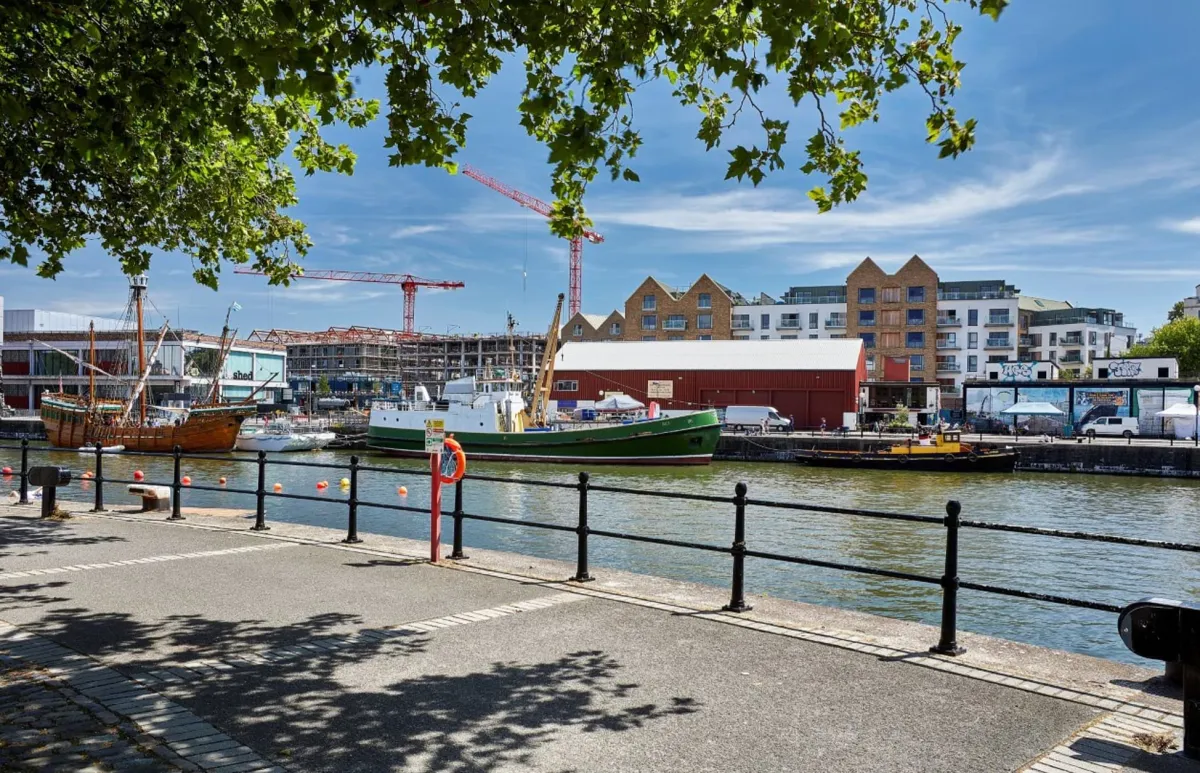 Photo: Wapping Wharf, via assets-eu-01.kc-usercontent.com
This isn't entirely accidental. Developers and planners working on creative quarter projects across the UK are increasingly drawing on research into what makes certain urban environments produce more social and professional connection than others. The academic language tends towards terms like 'third places' and 'serendipitous encounter design.' The Italian term is simpler: piazza.
'We spent a lot of time looking at why certain parts of Italian cities just work socially, and others don't,' says Marcus Delacorte, an urban consultant who has worked on creative district projects in Leeds and Sheffield. 'The consistent answer was that the successful spaces weren't designed around a single use or a single type of person. They were designed around movement, around the overlap between different kinds of daily routine. That's the piazza principle.'
Leeds, Glasgow, and the New Creative Quarters
In Leeds, the South Bank development has been explicitly informed by thinking about how public space can generate creative community rather than simply house it. The deliberate mixing of independent studios, larger creative businesses, food and drink, and genuinely open public space is intended to produce the kind of daily, repeated, low-stakes encounters that formal networking never could.
Glasgow's Barras Art and Design district operates on similar logic. The retention of market activity alongside studio and exhibition space creates a social texture that keeps the district alive across different times of day and different kinds of visitor. A ceramicist heading to their studio at nine in the morning passes the same traders and regulars as the gallery visitor arriving at noon. Paths cross. Conversations happen.
None of this is piazza design in a literal sense — no one is building fountains and colonnades in South Leeds. But the underlying philosophy is the same: create the conditions for accidental meeting, and then get out of the way.
Choreographed Spontaneity
The phrase that keeps surfacing in conversations with the developers and landlords thinking most carefully about this is 'choreographed spontaneity' — the idea that the best creative communities aren't built around planned interaction but around environments that make unplanned interaction almost inevitable.
For studio landlords, this means thinking beyond square footage and desk count. It means shared kitchens positioned on natural circulation routes rather than tucked away in corners. It means communal outdoor space that's genuinely usable in British weather (the Italian piazza needed to be reimagined for a country where it rains in August). It means programming that brings different types of tenants into the same physical space without requiring them to formally 'network.'
For individual creatives choosing where to work, it means paying attention to the social texture of a space before signing a lease. A beautiful studio with no communal infrastructure is a room. A slightly less beautiful studio where you'll inevitably encounter your neighbours every day is a piazza.
The Florentines understood something that British creative culture is only now beginning to articulate: the most valuable professional encounters are the ones nobody planned. The job of good design — urban, architectural, organisational — is simply to make those encounters as likely as possible.
And then, like any good piazza, to leave the rest to the people.