Between Order and Chaos: How Medieval Florentine Merchants Are Teaching British Creatives to Archive Like Masters
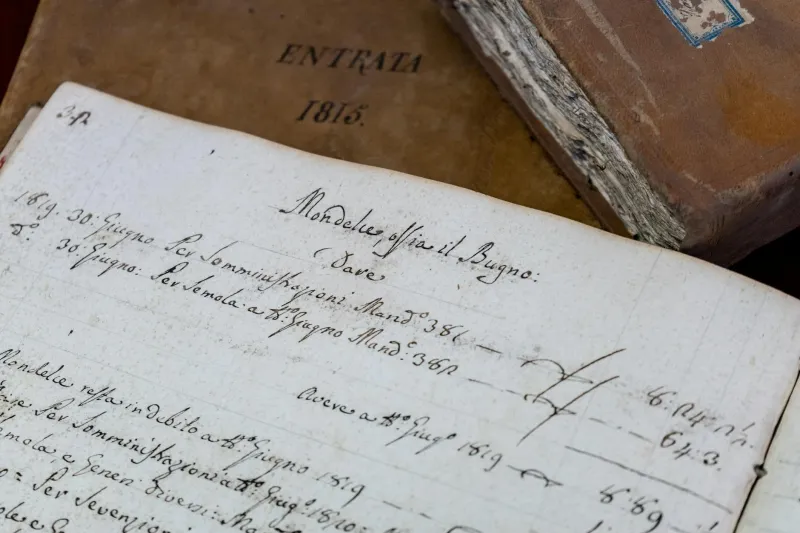
The Ledger That Launched a Revolution
In a cramped Shoreditch studio, graphic designer Sarah Chen pulls out what looks like a medieval manuscript. It's actually her project archive system, inspired by the colour-coded ledgers of 15th-century Florentine silk merchants. "I was drowning in digital files," she admits, "until I discovered how Renaissance traders managed information that could make or break empires."
The merchants of Florence didn't just revolutionise banking—they created archiving systems so sophisticated that modern British creatives are rediscovering their methods to survive the digital deluge that threatens to bury contemporary studios.
The Medici Method: Beyond Digital Chaos
The Medici banking empire wasn't built on intuition alone. It relied on meticulous documentation systems that tracked everything from silk shipments to papal loans. Their secret? A layered hierarchy that moved from broad categories to granular detail, with visual cues that allowed instant recognition.
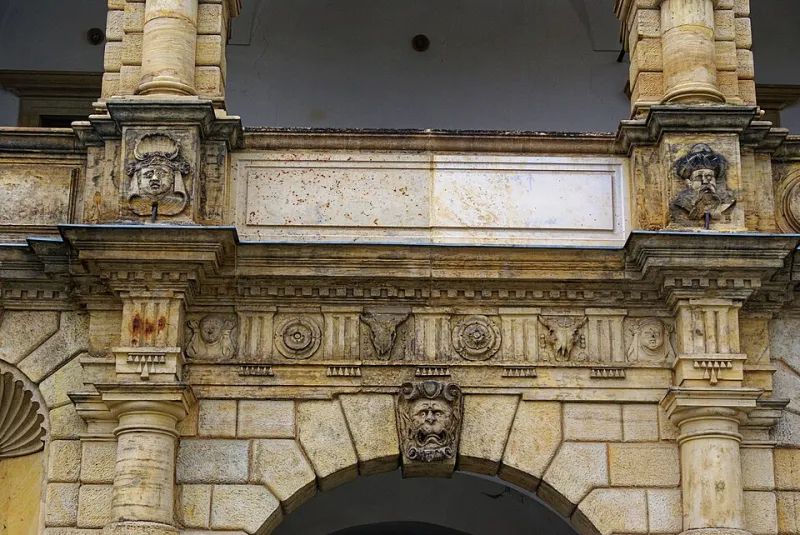
 Photo: Medici, via images.ctfassets.net
Florentine merchants used coloured inks not for decoration, but as functional coding systems. Red ink marked urgent transactions, blue indicated completed work, and black recorded standard entries. Each ledger followed strict formatting rules that any clerk could interpret immediately.
"It's like having a visual language for your entire practice," explains Tom Williams, a Brighton-based brand consultant who adapted Florentine principles after his agency nearly lost a major client's work in their chaotic file system. "We now use colour coding across everything—from initial concepts to final deliverables."
The Three-Tier Renaissance Framework
Florentine merchants organised their archives in three distinct layers: the Libro Segreto (secret book) for strategic information, the Libro di Ricordanze (memory book) for ongoing projects, and the Libro di Entrata e Uscita (income and expenditure book) for daily transactions.
Modern British studios are adapting this framework with surprising results. London illustrator Maya Patel restructured her entire practice around these three levels: "Strategic files contain my long-term goals and major client relationships. Active projects live in the middle tier with strict naming conventions. Daily work gets processed through a simple in-out system before being properly archived."
The key insight? Florentine merchants understood that information has different lifecycles. Not everything deserves the same level of attention or organisation.
Visual Hierarchy: The Lost Art of Meaningful Structure
Walk through the Uffizi's archives today, and you'll see documents from 500 years ago that remain perfectly navigable. The secret lies in visual hierarchy that transcends individual handwriting or personal preference.
Florentine clerks developed standardised layouts: client information always appeared in the same position, dates followed consistent formats, and project statuses used universal symbols. This wasn't bureaucracy—it was survival in an era when lost documents meant lost fortunes.
Cardiff-based design studio Howl & Hum adopted similar principles after expanding from two to twelve employees. "We created templates for everything," explains creative director James Roberts. "Client briefs, project timelines, even internal emails follow consistent structures. New team members can find anything within days, not weeks."
The Physical-Digital Bridge
The most successful adaptations don't abandon digital tools—they bridge physical and digital systems using Florentine principles. Renaissance merchants maintained both detailed ledgers and quick-reference summaries, understanding that different tasks required different information formats.
Sarah Chen's hybrid system exemplifies this approach. Her physical project books contain hand-drawn sketches and client notes, while her digital files mirror the same colour-coding and hierarchical structure. "The physical book forces me to slow down and think strategically. The digital system handles the heavy lifting of storage and search."
Beyond Organisation: The Cultural Shift
Florentine merchants didn't just organise information—they treated documentation as a professional craft worthy of pride. Their ledgers weren't just functional; they were beautiful objects that reflected the merchant's reputation and competence.
This cultural aspect resonates strongly with British creatives rediscovering the value of systematic approaches. "There's something deeply satisfying about a well-organised archive," notes Maya Patel. "It's not just about finding files quickly—it's about respecting your own work enough to preserve it properly."
Practical Implementation: The Modern Medici System
The adapted Florentine system starts with three simple principles: consistent naming conventions, visual coding systems, and layered information hierarchy.
For naming conventions, use the Florentine approach of date-client-project-status. Visual coding can be as simple as colour-coordinated folders or as sophisticated as custom iconography. The hierarchy should always move from strategic (long-term goals) through tactical (current projects) to operational (daily tasks).
Tom Williams' agency now processes new projects through a standardised intake system inspired by Florentine merchant practices: "Every new client gets the same documentation treatment. No exceptions, no shortcuts. It's transformed our ability to scale while maintaining quality."
The Renaissance Lesson for Modern Studios
The merchants of Florence understood something contemporary creatives often forget: organisation isn't the enemy of creativity—it's creativity's greatest enabler. When you can find anything instantly, when your systems support rather than hinder your thinking, when your archive becomes a strategic asset rather than a digital graveyard, you're free to focus on what matters most: the work itself.
In an era of infinite digital storage and instant communication, the careful, deliberate archiving methods of Renaissance Florence offer a surprisingly radical proposition: that how we organise our work is as important as the work itself. For British studios drowning in digital chaos, the merchants of the Medici era offer not just practical solutions, but a philosophy of professional practice that transforms archive from afterthought to competitive advantage.