The Art of the Open Ending: Why Leaving Work Unfinished Might Be the Bravest Thing a British Creative Can Do
The Stone That Keeps Its Secret
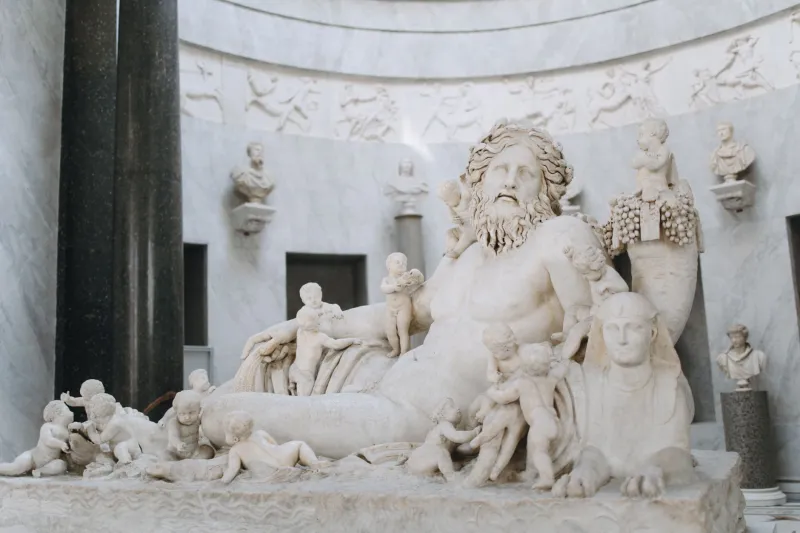
Walk into the Galleria dell'Accademia in Florence and you'll pass four extraordinary figures before you reach the David. They're called the Prisoners — or sometimes the Slaves — and they're unfinished. Limbs push through rough stone. Faces half-emerge. Bodies twist as if trying to free themselves from the marble they're trapped in.
Michelangelo may have intended to complete them. He may not have. Scholars still argue. But what's undeniable is that these incomplete works carry a charge that many of his finished pieces don't. The incompleteness isn't a flaw. It's an invitation. The viewer's imagination fills what the chisel didn't reach.
This idea — that the unfinished can be more powerful than the resolved — has been circling British creative culture for a while now. But something has shifted recently. It's no longer just a theoretical position. Practitioners across design, writing, illustration, and craft are actively building deliberate incompleteness into their work, and the results are starting conversations that polished, finished pieces rarely generate.
Finishing as a Form of Closure (And Not Always the Good Kind)
There's a pressure in professional creative life to finish things. Clients expect deliverables. Portfolios demand completed work. Social media rewards the reveal. The finished piece is the product, and the product is what gets paid for.
But some practitioners are beginning to question whether this relentless drive to resolution is actually costing them something.
Sophie Dallimore is a visual artist based in Bristol who works primarily in large-scale drawing. Two years ago, she started exhibiting work that she'd deliberately left at what she calls 'the threshold moment' — the point just before the composition resolves.
"I noticed that when I finished a piece, people would look at it, nod, and move on," she says. "When I stopped before the end, they'd stand in front of it for much longer. They'd lean in. They'd start talking to each other about what they thought it was becoming. The conversation was richer and stranger than anything I could have provided by finishing it."
What the Renaissance Called Non Finito
The Italians had a term for this: non finito. Literally 'not finished', it described a deliberate aesthetic choice — practised by Michelangelo, debated by Vasari, and visible across centuries of Italian sculpture and painting — where the incompleteness was understood as meaningful rather than accidental.
Non finito wasn't laziness or failure. It was a philosophical position. It acknowledged that the artwork existed in a relationship with its viewer, and that relationship required space — gaps into which imagination could travel.
This is subtly but importantly different from simply not finishing something. The non finito tradition required mastery: you had to understand the work deeply enough to know precisely where to stop. The incompleteness had to be intentional and controlled, or it was just a mess.
British creatives engaging with this idea are discovering the same thing. "Anyone can not finish something," says Edinburgh-based writer and editor James Torrance. "The skill is in knowing where the productive gap is — where your absence as the author actually creates more meaning than your presence would."
The Audience as Co-Author
What non finito really does, when it works, is redistribute authorship. The finished work tells you everything. The deliberately incomplete work tells you enough — and then trusts you to do the rest.
This is a fundamentally different relationship with an audience. It's less transactional and more collaborative. It treats the viewer, reader, or user as an intelligent participant rather than a passive recipient.
For British designers working in interactive and digital contexts, this principle is increasingly relevant. Harriet Osei, a UX designer working with cultural institutions across London, has started building what she calls 'productive ambiguity' into navigation and content structures.
"If everything is resolved and explained, there's no discovery. Users follow a path and leave. If there are intentional gaps — moments where they have to make a choice, or where the content suggests rather than states — they explore differently. They feel like the space is partly theirs."
The parallels with non finito are striking. The design withholds enough to create engagement rather than passive consumption.
The Courage It Actually Takes
Here's the thing nobody quite says out loud: leaving work unfinished — deliberately, publicly — requires a specific kind of confidence that British creative culture doesn't always encourage.
We tend to be apologetic about incomplete things. We preface them with caveats. We say 'it's not quite finished' as if incompleteness is inherently shameful. The Italian tradition of non finito carries no such apology. The incompleteness is the statement.
Learning to make that statement without hedging it is, for many practitioners, the actual creative challenge. It means trusting that what you've made is enough to sustain the conversation. It means believing your audience is capable of meeting you partway.
That's a harder thing to believe than it sounds, particularly for freelancers and independent makers whose livelihood depends on demonstrating competence and completion.
Where to Find Your Threshold Moment
If you're curious about incorporating deliberate incompleteness into your practice, a few starting points:
Work past the point you'd normally stop, then go back. Often the 'threshold moment' — the productive gap — is visible only in retrospect. Finish the work, then ask yourself where the last truly necessary mark was made.
Study the Prisoners. Or any of Michelangelo's non finito works. Look at what's there and what isn't. Ask yourself what the absence is doing.
Share work earlier. Before it's resolved. Not as a request for input, but as an invitation to conversation. Notice what happens.
Resist the explanatory caption. When you do leave work open, don't close it with text. The gap you've created in the work is undone the moment you explain it.
The open ending isn't a shortcut or a cop-out. Done well, it's one of the most demanding things a creative can attempt — and sometimes the most generous thing you can offer an audience is the space to finish it themselves.