Crossing Over: The Italian Threshold Philosophy That's Helping British Creatives Protect Their Mental Space

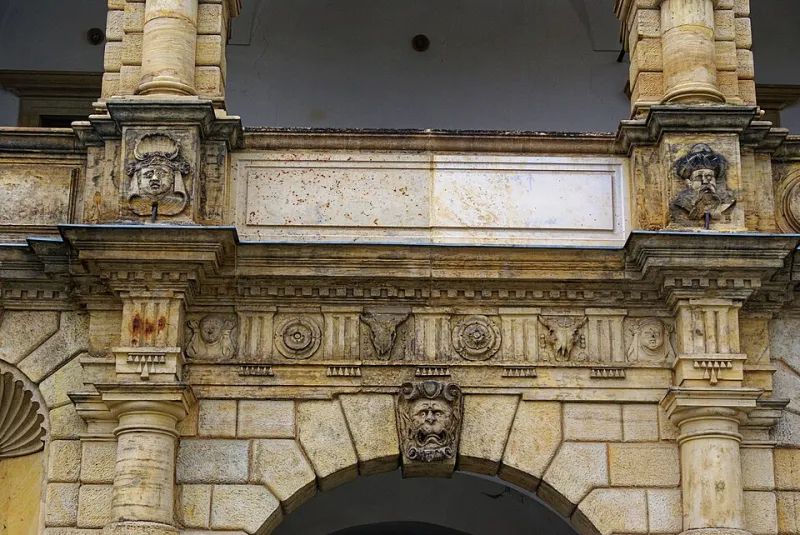
Photo: Yellow.Cat from Roma, Italy, CC BY 2.0, via Wikimedia Commons
Crossing Over: The Italian Threshold Philosophy That's Helping British Creatives Protect Their Mental Space
Most of us walk through doors without thinking. We move from room to room, from street to home, from work mode to something approximating rest, and the transition happens — or doesn't — somewhere in the background. The result, for many British creatives working from home or shared studios, is a kind of perpetual blurring. Work leaks into evenings. Creative anxiety follows you to the sofa. The studio never quite closes.
Italy has a different relationship with doorways.
The Soglia and What It Means
In Italian architectural and domestic culture, the soglia — the threshold — carries genuine philosophical weight. It's not simply the physical point where one space ends and another begins. It's a deliberate psychological boundary, a place of transition that asks something of you. When you cross it, you're meant to change.
This isn't mysticism. It's spatial intelligence. Italian homes and studios have long been designed with entrance spaces that function as decompression chambers — places where the outside world is acknowledged, set down, and left behind before you enter the inner sanctuary. Whether it's the grand entrance hall of a Milanese apartment or the small tiled vestibule of a Florentine artisan's workshop, the message is the same: this crossing matters.
For British creatives navigating the psychological chaos of blended work-life environments, this is a remarkably practical idea dressed in architectural clothing.
Why Transitions Fail in British Creative Spaces
The challenge for most UK creatives isn't a lack of desire to separate work from life. It's a lack of infrastructure to support it. A terraced house in Leeds doesn't come with a grand hall. A rented studio in Hackney might share its entrance with three other businesses. A spare bedroom converted into a workspace has a door that leads directly back to the landing, and the landing leads to the kitchen, and the kitchen has last night's dishes in the sink.
Without a designed threshold, the brain has no cue to shift. And without a shift, creative work bleeds into everything and nothing feels fully inhabited. You're never quite working and never quite resting.
The soglia philosophy doesn't require architectural intervention on a grand scale. It requires intention applied to the space that already exists.
What Milanese Interior Culture Gets Right
In Milan, where design is essentially a civic religion, entrance spaces are treated as the first statement of a home's character. Even modest apartments invest in the ingresso — the entry — with particular care. A considered coat hook. A single piece of art at eye level. A surface for keys that also holds a small plant or a scented candle. A rug with enough texture to register underfoot.
These aren't decorative indulgences. They're sensory anchors. Each element is chosen to mark the moment of arrival — to tell the body and mind that something has changed. The act of hanging your coat, placing your keys, noticing a scent — these micro-rituals accumulate into a genuine psychological crossing.
British creatives who've started applying this logic to their studio entrances describe it as quietly transformative. James, a graphic designer working from a converted garden room in Sheffield, created what he calls a "landing ritual" — a specific sequence of small actions he performs every time he enters and exits his studio. "It sounds mad," he admits, "but it genuinely works. When I walk in and do those things, I'm actually at work. When I do them in reverse and walk out, I'm actually done. My brain believes it."
Practical Threshold Design for Real British Spaces
The beauty of the soglia philosophy is that it scales down without losing its meaning. Here are some ways British creatives are applying it across different living situations.
For home studios: Define the doorway as a genuine threshold, even if it's a bedroom door. Hang something on the inside of the door that you only see when you're in work mode — a favourite print, a mood board, a piece of text that orients you creatively. On the outside, keep it clear. That visual distinction trains your brain over time.
For shared studios: Create a personal arrival ritual that you perform at your desk rather than the door. Brewing a specific tea, arranging your tools in a set order, spending two minutes with your quaderno before opening a screen. The ritual becomes your portable threshold.
For flat-dwellers with no dedicated studio space: The threshold can be temporal rather than spatial. A consistent opening sequence — the same playlist, the same lamp switched on, the same brief physical act — creates a psychological door where no architectural one exists.
For terraced houses: The hallway, however narrow, is your soglia. Treat it accordingly. A single hook for your studio bag. A small shelf for your studio keys (separate from your house keys, even if they live in the same pocket). A mat that you cross with intention. These small investments signal that arrival here is different from arrival anywhere else.
The Closing Ritual Matters Too
Italian threshold culture is as concerned with leaving as with arriving. The act of crossing out — of stepping back through the soglia into the world — is equally deliberate. This is why so many British creatives who've adopted the practice emphasise the exit ritual just as strongly as the entrance.
Leaving your studio space with intention — closing a specific notebook, switching off a particular lamp, saying something out loud to mark the end — completes the psychological circuit. You crossed in. Now you cross back. The work stays where it belongs.
In a culture that increasingly struggles to switch off, that's not a small thing. That's the whole point of the door.