Mapping Your Creative Territory: The Renaissance Art of Visual Navigation That's Revolutionising British Design Thinking
The Art of Beautiful Direction
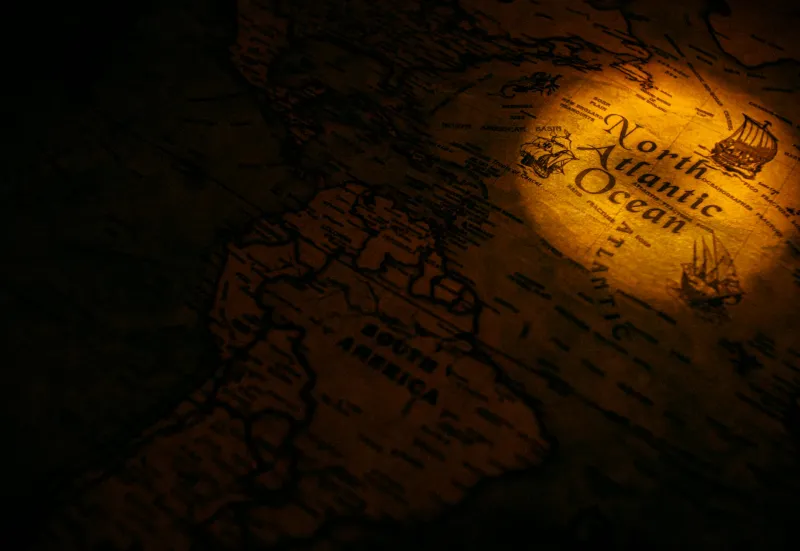
In 16th-century Italy, a map was never just a map. When Venetian cartographer Fra Mauro created his legendary world map, he wasn't simply plotting coastlines and trade routes—he was crafting a visual story that transformed navigation into an act of wonder. Every compass rose was hand-illuminated, every sea monster carefully positioned, every city depicted with architectural precision that rivalled the buildings themselves.
This tradition of decorative cartography understood something profound: the act of mapping isn't just about reaching a destination—it's about understanding your relationship to the territory itself. Today, British creatives are rediscovering this wisdom, using the visual language of Renaissance mapmaking to navigate everything from complex client relationships to the uncharted waters of their own creative practice.
Charting the Creative Landscape
Step into the Shoreditch studio of brand strategist Marcus Webb, and you'll find something unexpected covering his entire north wall: a hand-drawn map of the creative industry as he sees it. Illustrated in the style of a 15th-century portolan chart, it shows design agencies as fortified cities, freelance territories marked with personal heraldry, and client sectors depicted as distinct geographical regions with their own customs and currencies.
"I started drawing this after feeling completely lost in my career," Webb explains. "I realised I'd been navigating by instinct alone, with no clear sense of where I was or where I wanted to go. Creating this map forced me to think strategically about my position in the creative ecosystem."
The map isn't static—Webb updates it quarterly, adding new territories he's explored, marking successful client relationships with golden routes, and noting areas he wants to avoid with traditional cartographic warnings like "Here be dragons."
The Client Journey as Illuminated Manuscript
In her Manchester-based design consultancy, Sarah Winters has revolutionised client onboarding by treating each new relationship as an expedition requiring its own custom chart. Instead of standard project timelines, she creates bespoke "journey maps" that visualise the entire collaboration as a Renaissance-style adventure.
"Clients don't just want to know when their logo will be finished," Winters observes. "They want to understand the creative process, feel involved in the discovery. By mapping their journey like an illustrated quest, complete with milestone celebrations and potential challenges marked as mountain passes or river crossings, I help them see our collaboration as an adventure rather than a transaction."
Her client maps include everything from "discovery islands" where research happens, to "revision rapids" where feedback is incorporated, and finally "launch harbours" where projects are delivered. Each map is hand-lettered and includes decorative elements that reflect the client's industry—architectural firms get maps with building-inspired borders, while restaurants receive charts decorated with botanical illustrations.
Studio Territory: Mapping Internal Geography
The practice extends beyond client work into the intimate geography of creative spaces themselves. Edinburgh photographer James MacLeod has created what he calls a "studio territory map" that charts not just the physical layout of his workspace, but the emotional and creative zones within it.
"I realised my studio had distinct neighbourhoods," MacLeod explains. "The editing corner feels completely different from the equipment storage area, which feels different again from where I meet clients. By mapping these zones like a Renaissance city planner, I started being more intentional about how I use each space."
His studio map, drawn in sepia ink with careful attention to perspective and decoration, shows "Inspiration Alley" (his mood board wall), "Equipment Quarter" (where cameras live), and "Client Square" (the meeting area). He's even marked seasonal changes—noting how natural light shifts throughout the year affect the "shooting districts" of his space.
The Philosophy of Visual Navigation
What makes these creative maps more than mere novelty is their grounding in Renaissance cartographic philosophy. Italian mapmakers understood that accurate navigation required more than precise coordinates—it demanded an understanding of relationships, hierarchies, and the cultural significance of different territories.
London-based design duo Thompson & Clarke apply this thinking to their collaborative process. They begin every project by creating what they call a "creative territory map" that charts not just tasks and deadlines, but the intellectual landscape they'll be exploring together.
"We map our different areas of expertise like neighbouring kingdoms," explains Clarke. "My strength in typography becomes the 'Letterform Principality,' while Thompson's illustration skills are charted as the 'Visual Narrative Republic.' By understanding our creative geography, we can plan expeditions that utilise both territories effectively."
Practical Cartography for Modern Makers
The revival of decorative mapping isn't purely aesthetic—it's proving remarkably practical for solving contemporary creative challenges. Birmingham ceramicist Elena Rodriguez uses hand-drawn "process maps" to navigate complex commission workflows.
"Each piece I make requires dozens of decisions," Rodriguez explains. "By mapping the creative process like a Renaissance journey—from 'Clay Selection Shores' through 'Throwing Territories' to 'Glazing Gardens'—I can visualise the entire expedition before I begin. It helps me spot potential problems and plan for them."
Her process maps include decorative elements that reflect the final piece: flowing water motifs for fluid forms, geometric patterns for architectural vessels, botanical borders for garden-inspired work. The maps become part of her client presentation, helping commissioners understand the craft journey their piece will undertake.
Digital Territories, Analogue Wisdom
Interestingly, many British creatives are using hand-drawn mapping techniques to navigate digital territories. Social media strategist David Park creates illustrated maps of platform ecosystems, showing Instagram as a visual archipelago, Twitter as a rapid-conversation river system, and LinkedIn as a professional trading port.
"Digital platforms can feel abstract and overwhelming," Park notes. "By mapping them with Renaissance cartographic language—complete with trade winds, safe harbours, and dangerous currents—I help clients understand these environments as navigable territories rather than chaotic oceans."
The Confidence of Knowing Where You Stand
Perhaps the most profound aspect of this cartographic revival is its psychological impact. Renaissance mapmakers knew that beautiful, detailed charts didn't just help you reach your destination—they made you feel capable of the journey itself.
As textile designer Hannah Forbes discovered when she began mapping her creative practice: "There's something deeply reassuring about seeing your position clearly marked on a beautiful chart. It doesn't matter if the territory ahead is unknown—you know exactly where you're starting from, and that confidence changes everything."
In an age of creative overwhelm and professional uncertainty, the Italian art of decorative mapmaking offers British creatives something invaluable: a way to transform confusion into clarity, anxiety into anticipation, and the unknown into an adventure worth taking. After all, every great creative journey begins with understanding exactly where you are.