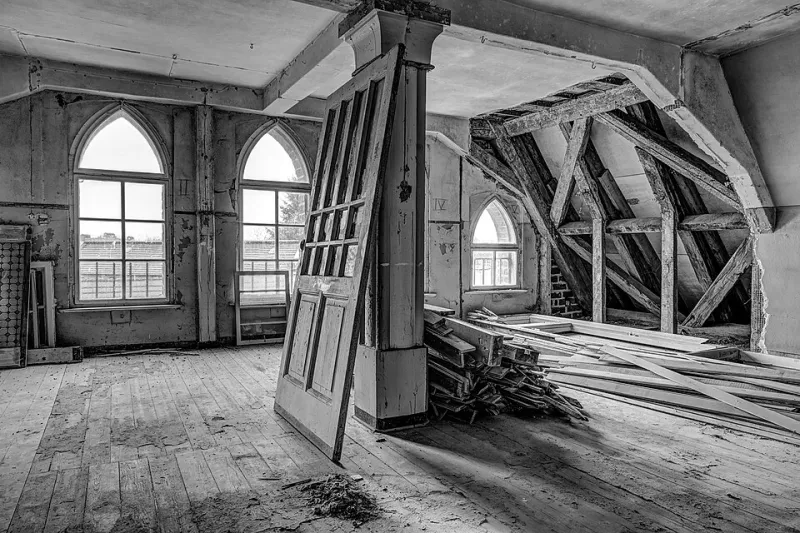
Stealing Sunlight: The Ancient Italian Art of Light Borrowing That's Illuminating Britain's Darkest Studios
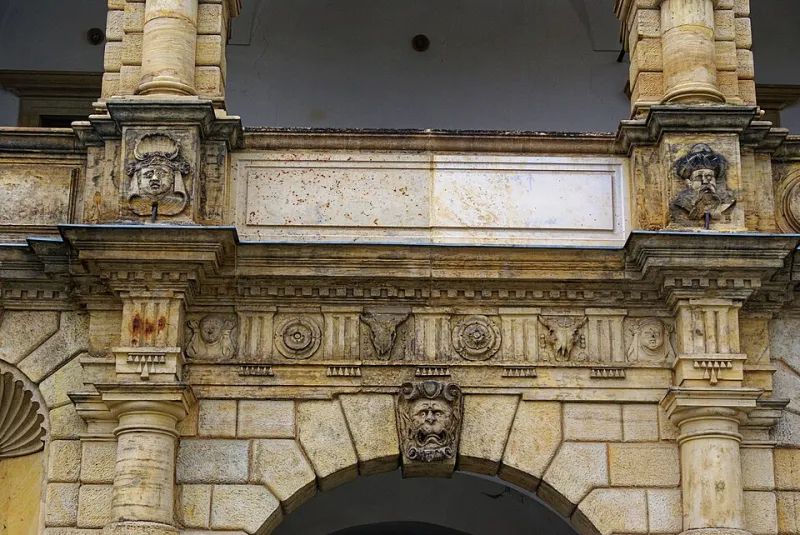
The Venetian Revelation
Stand in the courtyard of any Venetian palazzo and you'll witness architectural alchemy: harsh Mediterranean sun transformed into soft, even illumination that floods interior spaces through seemingly impossible angles. The secret lies not in the light itself, but in how it's borrowed, bounced, and borrowed again through a sophisticated network of reflective surfaces, calculated openings, and strategic positioning.
This wasn't accident but necessity. Venice's dense urban fabric and precious real estate demanded maximum illumination from minimal direct access to sky. The solutions developed over centuries now offer British creatives a masterclass in wringing light from the most challenging spaces.
"I used to think my north-facing flat was hopeless for photography," explains Manchester-based photographer James Chen, gesturing toward what was once a dim corner and is now flooded with soft, even light. "Then I spent a month studying Venetian architecture online. Everything changed."
The Science of Borrowed Brilliance
Italian architects understood something that modern lighting design often overlooks: that indirect light is frequently superior to direct illumination for creative work. The harsh shadows and glare of unfiltered sunlight can be as problematic as insufficient light, particularly for detailed visual work.
The Italian approach centres on three core principles: capture, transform, and distribute. Light is first captured from any available source — often not the obvious ones. It's then transformed through reflection, diffusion, or colour filtration. Finally, it's distributed throughout the space using strategic surfaces and openings.
Consider the reading rooms of the Laurentian Library in Florence, where Michelangelo designed windows that never allow direct sunlight to hit the manuscripts, yet the spaces remain brilliantly illuminated throughout the day. The light bounces off calculated angles, creating even, shadow-free illumination perfect for detailed work.
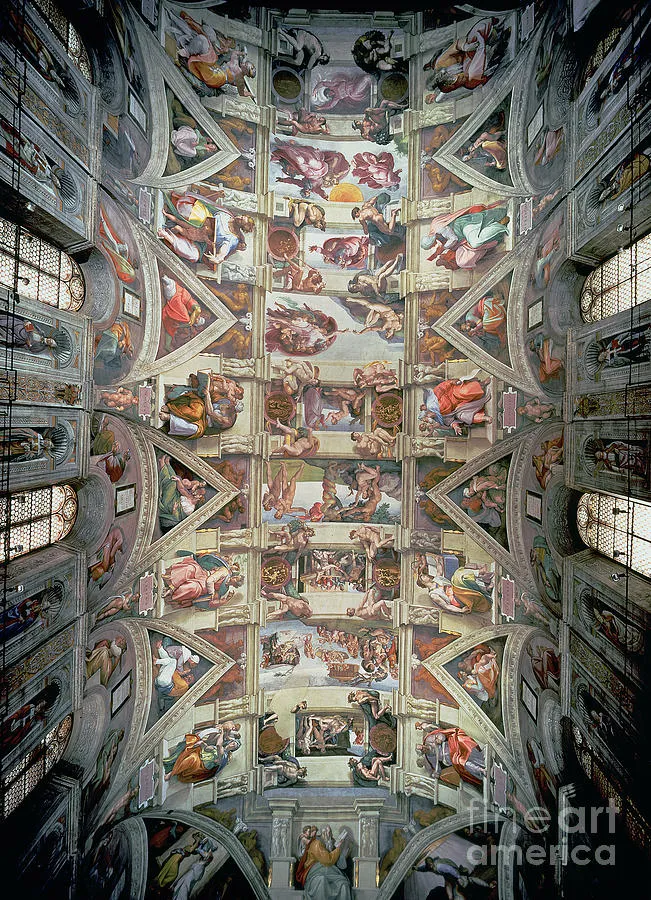 Photo: Michelangelo, via images.fineartamerica.com
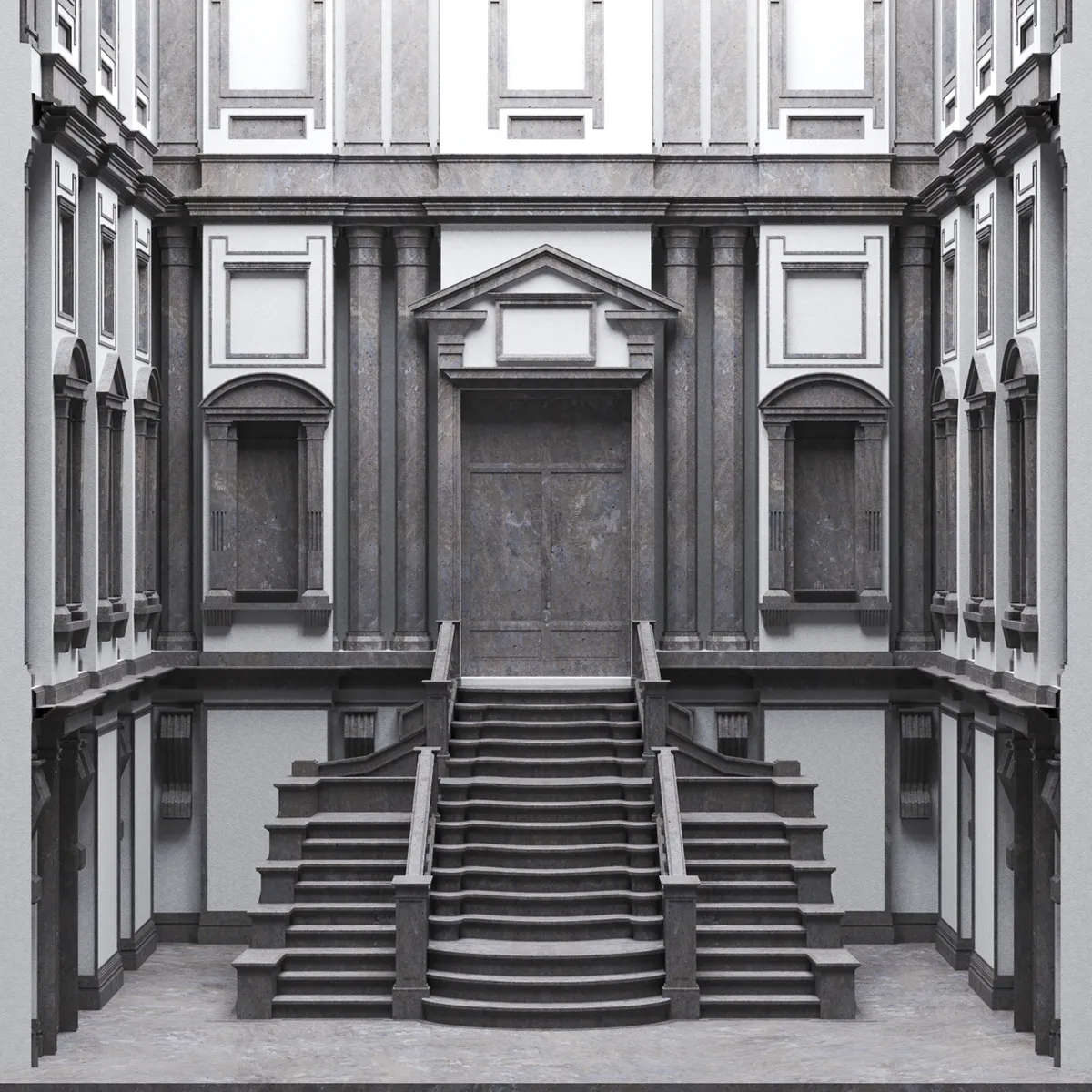 Photo: Laurentian Library, via xwarchitecture.com
The Mirror Revolution in British Studios
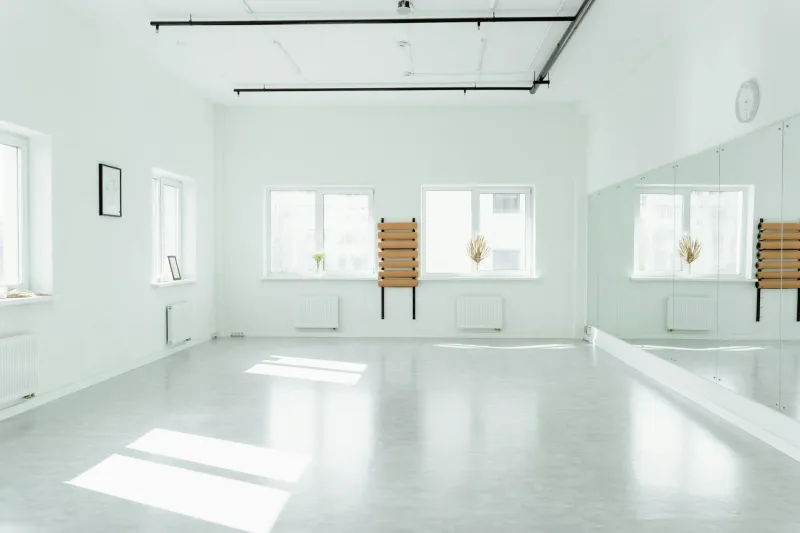
The most immediate application of Italian light-borrowing principles involves strategic mirror placement — not for vanity, but as architectural elements that redirect and multiply available light.
London textile artist Sarah Morrison discovered this principle while struggling with her basement studio's single, small window. "I started with one large mirror positioned to catch the morning light and bounce it deeper into the space," she explains, showing how a simple mirror placement doubles her workspace's usable area. "Then I added smaller mirrors at specific angles to eliminate shadows from my work table."
The key lies in understanding reflection angles and timing. Italian palazzi often feature mirrors positioned to catch light at specific times of day, creating a choreography of illumination that follows the sun's path.
The Clerestory Secret
Perhaps the most sophisticated Italian light-borrowing technique involves clerestory windows — high openings that capture sky light while maintaining privacy and wall space. British Victorian architecture includes some clerestory elements, but Italian applications demonstrate far more creative possibilities.
Edinburgh ceramicist Tom Richardson transformed his converted garage studio by adding a series of small, high windows along one wall. "The council wouldn't approve large windows facing the street," Tom explains, "but these clerestory openings flood the space with north light perfect for assessing glazes and forms."
The placement requires careful calculation. Too low, and the light creates harsh angles. Too high, and it fails to penetrate the working area. Italian churches offer masterclasses in optimal clerestory positioning, with openings calculated to provide even illumination without glare.
The Courtyard Principle in Urban Flats
Venetian courtyards — those magical light wells that seem to generate illumination from nowhere — offer profound lessons for British urban dwellers. The principle involves creating or enhancing vertical light shafts that bounce illumination between reflective surfaces.
Birmingham graphic designer Lucy Hartwell applied this principle to her flat's narrow lightwell. "I painted the facing walls in carefully chosen light colours and added mirrors at ground level to bounce light upward," she demonstrates. "What was once a dim shaft now functions like a Venetian courtyard, feeding light to three different rooms."
The colour choices matter enormously. Italian architects understood that different hues reflect light differently — warm whites enhance golden hour illumination, while cooler tones optimise overcast British conditions.
The Art of Light Layering
Italian interiors rarely rely on single light sources. Instead, they create complex layering systems where borrowed natural light combines with carefully positioned artificial illumination to create consistent, flattering conditions throughout the day.
This approach proves particularly valuable for British creatives dealing with dramatic seasonal light variations. Newcastle printmaker Emma Clarke developed a layering system inspired by Roman church lighting: "I have three different artificial light sources that can supplement or replace natural light depending on conditions. But they're all positioned to work with the borrowed light patterns I've created, not fight against them."
The artificial lights don't simply replace natural illumination when it fades — they're integrated into the borrowing system, bouncing off the same reflective surfaces and following the same distribution patterns.
Practical Applications for Every Space
The Basement Studio
Even spaces with minimal natural light can benefit from Italian borrowing principles. Liverpool artist Marcus Webb transformed his basement workshop by installing a light tube system that captures roof light and delivers it through reflective ducting. "It's like having a periscope for sunlight," he explains. Combined with strategically placed mirrors, his basement now rivals ground-floor studios for illumination quality.
The North-Facing Challenge
British creatives often despair over north-facing windows, but Italian architecture demonstrates how to maximise these consistent light sources. The key lies in understanding that north light, while cooler, offers exceptional consistency for colour work.
Glasgow jeweller Anna Petrov enhanced her north-facing window with a system of adjustable mirrors that can redirect the light to different work areas throughout the day. "North light is actually ideal for detailed work," she notes. "The mirrors let me move that perfect illumination wherever I need it."
The Shared Space Solution
Many British creatives work in shared or multi-purpose spaces where permanent architectural changes aren't possible. Italian principles adapt beautifully to temporary installations.
Portable mirror systems, adjustable reflective panels, and strategic furniture placement can create borrowed light effects without permanent modification. Bristol illustrator Jenny Walsh uses a collection of white boards and small mirrors that she arranges differently depending on the season and time of day.
The Seasonal Adaptation
Perhaps the most valuable aspect of Italian light-borrowing techniques is their adaptability to changing conditions. British light varies dramatically between seasons, requiring flexible systems that can optimise different types of illumination.
Italian architecture anticipated this challenge. Venetian palazzi often feature adjustable elements — shutters, panels, and moveable mirrors — that allow fine-tuning of light conditions. Modern British applications might involve adjustable mirror angles, moveable reflective panels, or seasonal changes to wall colours.
Beyond Functionality: The Mood of Light
The ultimate goal of Italian light borrowing extends beyond mere illumination to the creation of specific atmospheric qualities. The soft, even light of a Florentine chapel creates a contemplative mood that enhances focused work. The dynamic, shifting illumination of a Venetian salon energises and inspires.
British creatives are discovering that borrowed light systems don't just improve visibility — they fundamentally alter the emotional character of creative spaces. "My studio feels completely different now," reflects James Chen, watching afternoon light dance across his photography setup. "It's not just brighter — it's more alive."
The ancient Italian understanding that light shapes not just what we see, but how we feel and work, offers British creatives a path toward spaces that nurture both practical needs and creative spirit. In our often grey climate, the ability to borrow, multiply, and transform available light becomes not just technique, but art.