Never Quite Finished: The Italian Secret That's Setting British Creatives Free
Somewhere in the Accademia in Florence, Michelangelo's Prisoners stand half-emerged from their marble blocks. Arms reach, torsos twist, faces strain — and then the stone simply stops. For centuries, art historians debated whether these were abandoned works or tragic accidents of fate. But a growing number of creatives, many of them based right here in Britain, are starting to read them differently. What if they were always supposed to look exactly like that?
The Italian concept of incompiutezza — roughly translated as deliberate incompleteness — has been floating around philosophy and art theory for decades. But it's only recently begun to find a genuinely practical audience among designers, illustrators, writers, and makers in the UK who are exhausted by the relentless pressure to deliver polished, finished, perfect work. And honestly? It's arriving at exactly the right moment.
The Tyranny of the Finished Thing
British creative culture has a complicated relationship with completion. On one hand, there's a deep cultural pride in craft, in doing things properly, in presenting work that's been thoroughly considered. On the other, that instinct has curdled — particularly in the digital age — into something more anxious and less productive. The pressure to launch, publish, post, and deliver has created a generation of creators who are either paralysed before they start or burning themselves out chasing a version of 'done' that keeps moving.
London-based brand designer Priya Mehta describes it bluntly. "I was spending more time refining work in private than actually putting it in front of clients. I'd get to ninety percent and then just... stall. I told myself it wasn't ready. But really, I was frightened."
She's not alone. Across studios and freelance setups from Edinburgh to Bristol, the same pattern repeats. Creative people producing genuinely strong work, but unable to release it because the gap between what exists and what they imagine feels insurmountable.
What the Renaissance Actually Understood
Here's the part that gets interesting. Renaissance artists didn't stumble into incompleteness — many of them chose it, consciously and philosophically. Leonardo da Vinci left dozens of works unfinished. Not because he ran out of time (though he sometimes did), but because he believed a work in progress retained a kind of living energy that completion could actually destroy. The sfumato technique he's famous for — those soft, smoky transitions between light and shadow — was itself a refusal to define hard edges. Ambiguity, for Leonardo, wasn't a problem to solve. It was the point.
Michelangelo's non-finito approach took this further still. The unfinished surface, he argued, allowed the viewer's imagination to participate. The work wasn't complete because it wasn't supposed to be complete without you.
This is a genuinely radical idea when you apply it to contemporary creative practice. What if the work you're agonising over isn't unfinished because you haven't worked hard enough — but because leaving it slightly open is actually its strongest quality?
Releasing the Draft
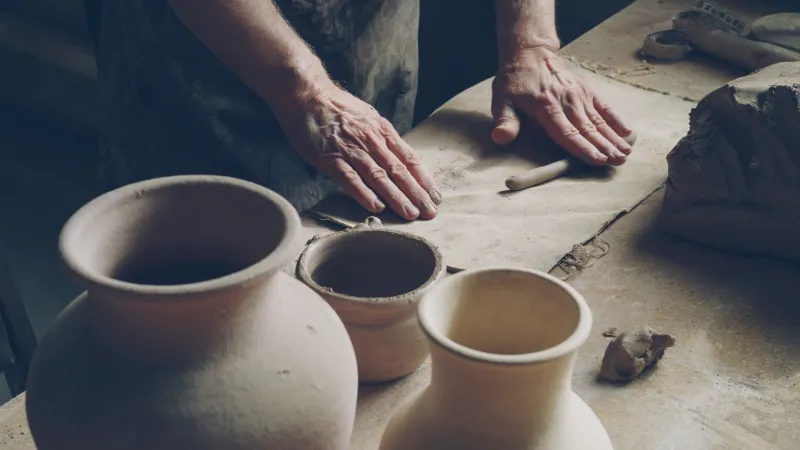
Manchester-based illustrator Tom Greaves started experimenting with incompiutezza after a conversation with a colleague who'd spent time studying in Bologna. "She told me about how Italian ceramicists would sometimes leave a glaze deliberately uneven, or let a crack stay visible. Not sloppily — intentionally. The imperfection was evidence of process. It made the object more honest."
Tom began releasing sketch-stage work alongside finished pieces. The response surprised him. "People connected more with the sketches. They'd comment on the energy in the lines, the sense of something being discovered. The finished versions felt more impressive but less alive."
This isn't an argument for laziness or half-heartedness. Incompiutezza isn't about doing less — it's about understanding where a work actually reaches its peak value. Sometimes that's before the final layer of polish. Sometimes the refining process removes precisely the quality that made the thing worth looking at.
The Productivity Angle Nobody's Talking About
There's also a deeply practical case for embracing the unfinished. Perfectionism is expensive. The hours spent in that final twenty percent — the obsessive tweaking, the endless revision loops — are often the least valuable hours in any project. Research from the University of Bath's creative industries programme has found that creators who set deliberate 'good enough' thresholds and release work earlier tend to produce more, iterate faster, and develop stronger creative voices over time.
More iterations mean more learning. More learning means better work. The creator who releases twelve pieces a year and refines based on real response will almost always outpace the one who releases four perfect objects and calls it done.
Italian design culture has understood this intuitively for centuries. The bozzetto — the preliminary model or sketch — was treated as a legitimate creative object in its own right, not merely a stepping stone to the real thing. Sharing the bozzetto was normal. Getting feedback on it was the process, not a sign of inadequacy.
Making Peace with the Middle
For British creatives raised on the idea that you don't show your workings, this requires a genuine shift in perspective. It means reframing the work-in-progress not as something to be hidden but as something to be valued. It means trusting that your audience is intelligent enough to engage with something that's still becoming.
It also means making peace with the fact that some works simply don't have a final state. A design system evolves. A creative practice shifts. A body of work is always, on some level, in progress. Fighting that reality doesn't make the work better — it just makes the maker more exhausted.
Priya, the brand designer from earlier, eventually shared a half-developed visual identity with a client — something she'd have previously hidden for another three weeks. "They loved the rawness of it. They felt involved. We built something together from that point, which was actually more satisfying than presenting a finished answer."
Michelangelo's prisoners aren't struggling to escape the marble. They're exactly where they need to be — caught in the act of becoming. There's a lesson in that for every British creative staring at a piece of work that's almost, nearly, very-nearly ready. Maybe it already is.