Taught by Doing: The Old Italian Model That's Quietly Reshaping How Young British Creatives Actually Learn
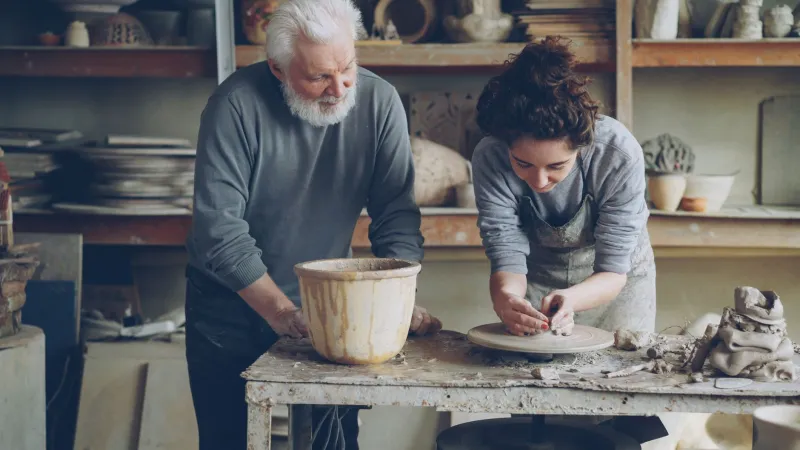
In fifteenth-century Florence, if you wanted to become a painter, you didn't sit in a lecture hall. You swept the workshop floor. You ground pigments, stretched canvases, and ran errands for a master who probably barely acknowledged your existence for the first six months. Then, gradually, you were handed a brush. Given a corner of a commission to complete. Trusted with something real. By the time you were ready to work independently, you hadn't just studied your craft — you'd absorbed it, through your hands and your attention, over years of genuine proximity to excellence.
The bottega — the Renaissance Italian workshop — was one of the most effective creative education systems ever devised. And right now, across Britain, something that looks remarkably similar is beginning to quietly re-emerge.
Why the Degree Isn't Enough
Let's be honest about the situation. Art school and design degrees in the UK are extraordinarily expensive, increasingly competitive, and — for many graduates — not producing the outcomes they were sold. Graduate designers emerge into a market that expects portfolio depth, client experience, and professional instincts that three years of academic study rarely provides. The gap between what universities teach and what studios actually need has never been wider.
This isn't a criticism of education itself. It's a structural problem. Universities are built around knowledge transfer. The bottega was built around skill transfer — and those are genuinely different things. You can understand colour theory from a textbook. You can only learn how to use colour by working alongside someone who's already mastered it, watching their decisions in real time, absorbing their instincts through proximity.
"I learned more in six months assisting at a studio than in two years of my degree," says Callum Reid, a Glasgow-based graphic designer now in his late twenties. "Not because my tutors were bad — they weren't. But there's something about being in a real environment, with real pressure and real clients, that changes how you process everything."
The Modern Bottega in Practice
What does a contemporary British bottega actually look like? It's less formalised than you might expect, and far more varied. Some take the shape of formal apprenticeships — structured arrangements where a young creative works within an established studio for a set period, often in exchange for a modest wage and mentorship rather than a salary. Others are more organic: a young illustrator who starts by helping a senior artist with admin and gradually earns a seat at the creative table.
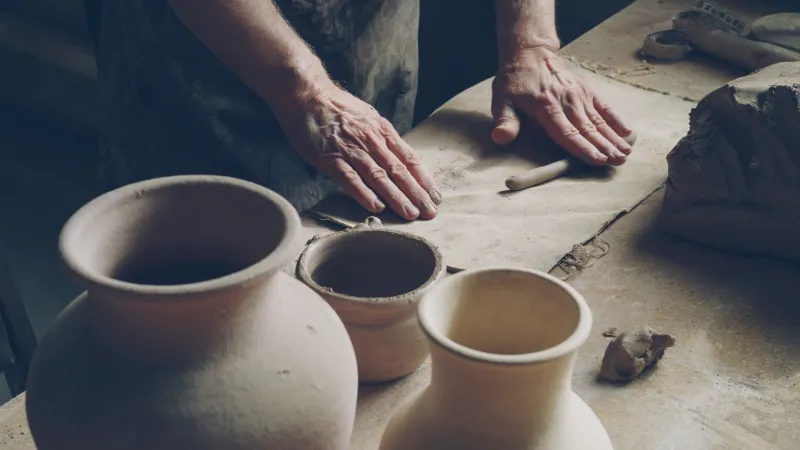
In Bristol, ceramicist Helen Darch has been running what she calls an "open studio apprenticeship" for four years. She takes on two or three emerging makers each year, offering them studio access, materials, and her time — in exchange for help running workshops and managing the kiln schedule. "It's not charity," she's clear about that. "They bring energy and fresh eyes. I get help with the practical side of running a studio. And they get something a degree genuinely can't offer: a real relationship with practice."
In London, several independent design studios have begun formalising similar arrangements, partly out of a genuine belief in the model and partly because the talent coming through formal routes often needs significant additional development before they're truly work-ready. Taking someone on as an apprentice-equivalent, rather than a junior hire, reframes the relationship more honestly.
The Master's Responsibility
Here's the part the Renaissance understood that modern mentorship culture sometimes glosses over: the master had genuine obligations. This wasn't a one-way transaction. Verrocchio, who ran the Florentine workshop where a young Leonardo da Vinci trained, didn't just use his apprentices as cheap labour. He recognised talent, developed it, and took genuine pride in the achievements of those who passed through his studio. When Leonardo's contribution to a shared painting surpassed his teacher's, Verrocchio — reportedly — put down his brush and never painted again. Not from bitterness, but from recognition. That's a profound model of mentorship.
The most successful contemporary versions of the bottega arrangement share this characteristic. The master is genuinely invested in the student's development, not merely their usefulness. Zara Okonkwo, a textile designer in Leeds who now mentors two emerging makers, puts it this way: "If I'm not actively thinking about how to help them grow, I'm just exploiting them. The whole thing only works if I'm as committed to their development as they are."
What Students Gain That No Course Can Teach
Beyond technical skill, the bottega model transfers something harder to quantify: professional instinct. How to handle a difficult client conversation. How to price work confidently. When to push back on a brief and when to trust the client's vision. How to manage your energy across a long project. How to fail without it destroying your confidence.
These are the competencies that creative professionals spend years developing through painful trial and error. In a genuine master-student relationship, much of that learning can be accelerated — not by being told, but by watching, asking, and being allowed to make smaller mistakes in a supported environment.
Callum, the Glasgow designer, is now beginning to mentor a younger creative himself. "I'm passing on things I didn't even realise I'd absorbed until someone asked me a question and I knew the answer. That's the strange alchemy of it. You don't always know what you've learned until you're asked to teach it."
Is This the Future of Creative Education?
Nobody's suggesting universities become redundant. But the bottega model — adapted for contemporary practice, made transparent about its expectations, and built on genuine mutual respect — offers something the formal system genuinely can't replicate. It's slower, more personal, and far less scalable. Which might be exactly why it works.
The Italian Renaissance produced some of the most extraordinary creative talent in human history, and most of them were educated in workshops, not academies. Britain's creative industries are beginning to remember why.