Ink and Memory: The Renaissance Workshop Journals Making a Comeback in Britain's Creative Underground
Ink and Memory: The Renaissance Workshop Journals Making a Comeback in Britain's Creative Underground
In a converted Victorian warehouse in Hackney, textile designer Sarah Chen reaches for her leather-bound journal before touching a single tool. Each morning, she documents everything from the quality of natural light streaming through her north-facing windows to the precise temperature of her dye baths. It's a ritual that would be instantly recognisable to a 15th-century Florentine master craftsman — and it's becoming increasingly common across Britain's creative landscape.
The Lost Art of Daily Documentation
For centuries, Italian bottega masters maintained meticulous daily records that went far beyond simple inventory lists. These workshop diaries captured the ebb and flow of creative work: which pigments responded best to autumn humidity, how apprentices progressed through complex techniques, even which clients brought positive energy to the space. The practice was so integral to Italian craft culture that many surviving journals read like intimate conversations between maker and material.
"The digital age promised to make documentation effortless," explains Dr. Marcus Whitfield, a historian specialising in Renaissance workshop practices at the University of Cambridge. "But what we've lost is the contemplative act of recording by hand — the pause that forces reflection on what actually happened, not just what we intended to happen."
 Photo: University of Cambridge, via c8.alamy.com
This gap between intention and reality is precisely what's driving a growing number of British creatives back to pen and paper. Unlike digital logs that can be updated retroactively, handwritten entries capture the authentic messiness of creative process — the happy accidents, the moments of doubt, the unexpected discoveries that often prove more valuable than planned outcomes.
Beyond Basic Record-Keeping
The modern practitioners aren't simply copying historical formats. London-based ceramicist James Morrison has developed what he calls "material conversations" — dialogues written between himself and his clay that help him understand why certain pieces succeed while others crack in the kiln. His workshop journal reads like poetry, documenting not just firing temperatures but the emotional state he brought to each session.
"Clay responds to everything," Morrison explains, flipping through pages covered in sketches, pressed leaves, and densely written observations. "Your mood, the weather, whether you've had enough coffee. The journal helps me see patterns I'd never notice otherwise."
This attention to environmental and emotional factors echoes the holistic approach of Renaissance masters, who understood that successful making required harmony between craftsperson, materials, and space. Modern neuroscience supports what they intuited: the act of handwriting engages different cognitive pathways than typing, leading to deeper processing and better memory retention.
The Anatomy of a Modern Workshop Journal
While formats vary wildly, certain elements appear consistently across Britain's revived journal-keeping community. Most practitioners begin each entry with what Italian masters called the "stato del giorno" — the state of the day — noting weather, mood, and any external factors that might influence their work.
Manchester-based furniture maker Elena Rodriguez structures her entries around three questions borrowed from historical Venetian woodworking texts: What did I attempt? What did I discover? What will I remember? This framework helps her capture both technical insights and intuitive breakthroughs that might otherwise be forgotten in the rush to complete commissions.
"The questions force me to slow down," Rodriguez notes. "Sometimes the most important discoveries happen in the gaps between planned activities — moments I'd never think to document digitally."
The Ripple Effect
Perhaps most surprisingly, the practice is extending beyond individual makers to entire creative teams. Design studio Collective North in Leeds has implemented shared workshop journals for collaborative projects, with team members taking turns to document daily progress, challenges, and insights. The physical act of passing the journal between contributors has become a ritual that strengthens project cohesion.
"There's something about reading someone else's handwriting that creates intimacy," observes studio founder Rachel Hayes. "Digital collaboration tools are efficient, but they don't build the same sense of shared journey."
The journals are also proving valuable for client relationships. Several British studios now share excerpts from their workshop logs with clients, offering unprecedented transparency into creative decision-making. Rather than diminishing professional mystique, this openness tends to increase client appreciation for the complexity and thoughtfulness behind seemingly simple solutions.
Making It Sustainable
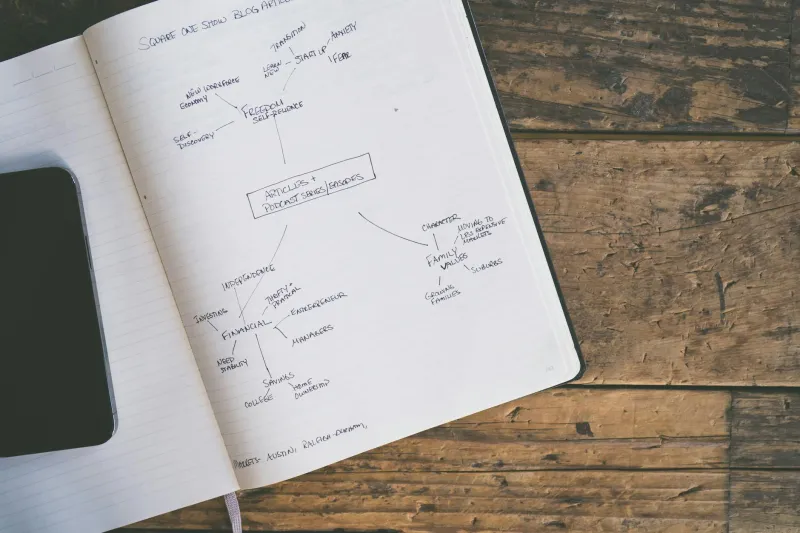
The key to maintaining a workshop journal practice, according to practitioners, lies in abandoning perfectionism. These aren't meant to be beautiful objects (though many become inadvertently stunning through accumulated layers of process notes, material samples, and sketched ideas). They're working documents that capture the authentic texture of creative work.
Glasgow-based illustrator Tom McKenzie keeps his journal deliberately rough: "If I worried about neat handwriting or perfect sketches, I'd never write anything. The messiness is the point — it reflects how creativity actually happens, not how we pretend it happens."
Many practitioners also emphasise the importance of developing personal shorthand and symbols that make documentation quick and intuitive. The goal isn't literary achievement but honest capture of process, complete with crossed-out mistakes and half-formed thoughts.
The Unexpected Renaissance
As Britain's creative industries grapple with digital overwhelm and the homogenising effects of algorithmic inspiration, the handwritten workshop journal offers something increasingly rare: a completely personal, unmonitored space for genuine reflection. In an age where every creative decision can be second-guessed by online communities, these private conversations with process provide essential sanctuary.
The practice is spreading organically, passed between makers through word of mouth rather than social media promotion. Perhaps this quieter form of knowledge transfer is itself part of the appeal — a return to the intimate, apprenticeship-based learning that characterised the Italian bottega system.
For contemporary British creatives seeking deeper connection with their practice, the workshop journal offers more than documentation. It provides a daily ritual of mindfulness, a tool for pattern recognition, and ultimately, a way to honour the complexity and beauty of making things by hand in an increasingly digital world.