Rooms of the Mind: The Ancient Italian Memory Art That British Creatives Are Using to Outsmart the Digital Age
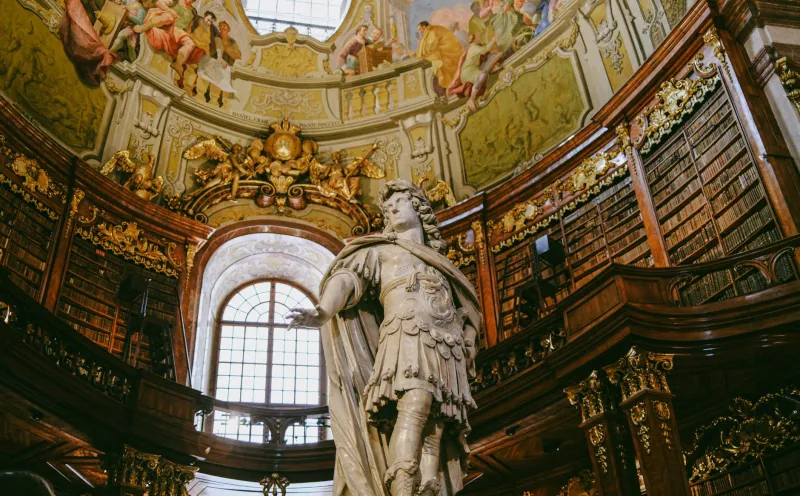
Picture a Florentine merchant in 1470. He has no laptop, no CRM system, no voice memos. Yet he's expected to recall the terms of dozens of contracts, the preferences of scores of clients, the price of silk in Bruges versus Genoa, and the names of every significant contact he's met in the past decade. He manages this not through frantic note-taking but through a disciplined mental practice called memoria artificialis — artificial memory — and the specific technique at its heart is what we now call the memory palace.
The idea is simple in outline, extraordinary in practice: you mentally construct a familiar building, walk through its rooms in a fixed sequence, and place vivid, often absurd images at specific locations within it. To recall information, you simply take the mental walk again. The images — the stranger the better — act as hooks for whatever you've stored there.
Several centuries later, in studios across Edinburgh, Leeds, and London, this very technique is being quietly revived by British creative professionals who are, frankly, drowning in digital information and finding that none of it sticks.
Why the Renaissance Merchant Remembered Everything
The ars memorativa — the art of memory — has roots going back to ancient Greece, but it was in Renaissance Italy that it became genuinely systematic. Scholars like Giulio Camillo and Giordano Bruno wrote elaborate treatises on memory architecture. More practically, merchants and bankers of the period used adapted versions of the technique as a competitive tool. In a world where written records were cumbersome and literacy wasn't universal among trading partners, the person who could carry complex information in their head held real power.
What made the Italian tradition distinctive was its marriage of classical learning with commercial pragmatism. This wasn't memory as party trick. It was memory as professional infrastructure.
For Edinburgh-based brand strategist Callum Fergusson, discovering this history was a turning point. "I was reading about Giulio Camillo's memory theatre — this extraordinary imagined building he designed where every level represented a different category of human knowledge — and I thought, that's essentially what I'm trying to do with my client files. Except my version is a folder structure that I never remember to use consistently."
Building Your Creative Palace
Adapting memoria artificialis for a modern studio practice requires a small shift in thinking and a surprisingly modest investment of time. The core principle remains: you associate information with vivid spatial imagery, housed in a mental location you know intimately.
The first step is choosing your palace. For most people, this is a childhood home, a school they attended, or any building they can navigate mentally with confidence. The key is sequence — you need a fixed route through the space, room by room, so that your mental walk is always the same.
You then populate each location with images that encode information. The more unusual, colourful, or emotionally charged the image, the more reliably it sticks. A brief for a rebrand project might be encoded as a giant scarlet typewriter sitting in your childhood kitchen. A client's particular aversion to sans-serif fonts might be stored as that same client wearing a top hat made of letters, standing in the hallway.
It sounds eccentric. It works.
What British Creatives Are Actually Using It For
The applications that creative professionals are finding most useful tend to cluster around three areas: retaining client context, encoding conceptual inspiration, and navigating complex project structures.
Freelance illustrator Priya Mehta, based in Bristol, began experimenting with the technique after a particularly embarrassing client meeting. "I'd completely forgotten that a client had mentioned, months earlier, that they had strong feelings about a particular colour palette because of a family connection. It came up again and I had no recollection of it. The relationship took a hit." She now uses a memory palace specifically for client-related information — preferences, sensitivities, previous feedback — and reviews it mentally before every call. "It's not replacing my notes. It's making sure the important stuff actually lands in my brain rather than just my documents folder."
For conceptual work, the technique functions differently. Leeds-based industrial designer Tom Hartley uses a separate palace — his old university building — to store visual and conceptual references. "When I'm researching a project, I'll encounter maybe two hundred images and articles. Most of it evaporates. Now I take the ten or fifteen things that genuinely resonate and encode them spatially. Three weeks later, when I'm at the drawing board, those references are actually accessible. They've become part of how I think about the project rather than just files I once opened."
The Analogue Advantage
There's something worth naming here about why this technique feels timely. The problem with digital storage isn't that it's insufficient — it's that it's too good. We externalise everything and, as a result, nothing quite lodges in the mind. Research in cognitive science suggests that the act of encoding information — really working to store it — is itself a creative act. It forces you to make connections, find analogies, decide what matters.
The memory palace doesn't replace your Notion workspace or your mood board folder. But it does something those tools can't: it makes you genuinely know things, rather than simply having access to them.
Callum Fergusson describes the difference as the gap between a map you've memorised and one you're reading off your phone. "With the phone, you can navigate. But you don't know where you are. The memory palace makes you know where you are."
Getting Started
If you want to try this in your own practice, start small. Choose one palace — a home you know well — and one category of information worth retaining. Client names and key preferences is a good beginning. Spend ten minutes before your next client call mentally placing vivid images for each person along a fixed route through that space.
The first attempts will feel clunky. Persist. Most people who stick with it for three weeks report a notable shift — not just in recall, but in how engaged they feel with the information itself. When you've had to work to store something, it tends to matter more.
The Renaissance merchants of Florence didn't build their memory palaces because they were fascinated by cognitive science. They built them because knowing things — really knowing them — was the difference between a good deal and a ruinous one. For British creatives navigating a landscape of infinite information and finite attention, the stakes feel remarkably similar.