The Workshop Symphony: How Italian Master Craftsmen Used Sound Architecture to Perfect Their Art
The Forgotten Fifth Element
Walk through any modern British design studio and you'll likely hear the familiar hum of productivity: the gentle whoosh of coffee machines, the rhythmic tap of keyboards, and—almost inevitably—the ambient wash of yet another 'focus playlist' streaming from someone's laptop. But venture back five centuries to the bustling workshops of Renaissance Italy, and you'd encounter something far more intentional.
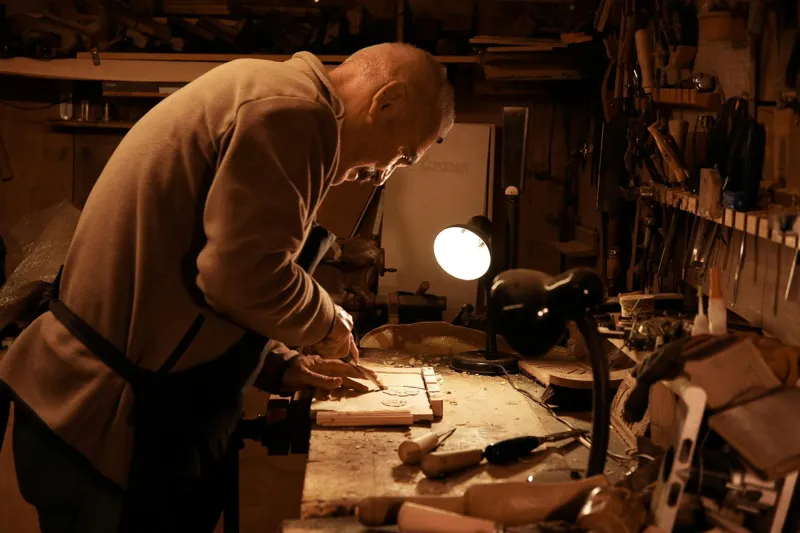
The master craftsmen of Florence, Venice, and Milan didn't simply tolerate the sounds around them—they orchestrated them. From the measured rhythm of hammer on anvil to the carefully chosen moments of sung verse, these artisans understood that sound could shape not just mood, but the very quality of their work.
The Science Behind the Song
In the workshops of 15th-century Florence, apprentices weren't just learning to mix pigments or carve wood—they were absorbing the subtle art of sonic timing. Master painters would often work to the natural rhythms of their neighbourhood: the morning call of street vendors providing an energetic start, the quieter afternoon lull allowing for detail work, and the evening bells signalling the transition to broader, more contemplative strokes.
This wasn't accidental. Modern neuroscience confirms what these craftsmen intuited: different types of sound can trigger distinct cognitive states. The repetitive nature of street chants and workshop songs helped maintain focus during lengthy, detailed tasks, while the varied cadences of spoken poetry could spark creative problem-solving during more experimental phases.
"The Italians understood something we've forgotten," explains Dr. Sarah Mitchell, a sound therapist working with creative professionals across Manchester and Leeds. "Sound isn't just what happens around your work—it can become part of the work itself."
Beyond the Generic Playlist
Today's British makers are beginning to reclaim this intentional approach. At a ceramics studio in Brighton, potter James Whitfield has abandoned streaming services entirely, instead curating what he calls his 'throwing soundtrack'—a carefully sequenced blend of field recordings from Italian markets, traditional folk songs, and moments of complete silence.
"I realised I was letting Spotify dictate my creative rhythm," he explains. "Now I build my sound environment like I'd build a glaze formula—with purpose and precision."
Similarly, textile artist Emma Richardson, based in Edinburgh, has developed what she terms 'process playlists'—different sonic environments for different stages of her work. Her 'planning playlist' features the ambient sounds of Italian cafés, recorded during a research trip to Milan. For detailed hand-stitching, she turns to the repetitive, meditative rhythms of traditional Scottish folk songs. And for the final stages of each piece, she works in complete silence, allowing the work itself to 'speak.'
Crafting Your Creative Soundtrack
The Italian bottega approach to sound can be adapted for any creative practice, regardless of medium or location. The key lies in understanding that different types of work require different sonic environments—and that these environments should be as deliberately chosen as any other tool in your creative arsenal.
For British creatives looking to build their own bottega soundtrack, the process begins with observation. Spend a week noting which sounds naturally occur during your most productive periods. Do you work best with the distant hum of traffic? The irregular rhythm of rain against windows? The gentle buzz of a bustling café?
Next, consider the different phases of your creative process. Initial brainstorming might benefit from the varied, unpredictable rhythms of street recordings or nature sounds. Detailed execution work often thrives with more repetitive, steady rhythms—think the measured beat of traditional craft songs or even the consistent hum of machinery. And reflective, editing phases might call for either complete silence or the gentle, non-intrusive presence of ambient soundscapes.
The Ritual of Listening
Perhaps most importantly, the Italian masters understood that engaging with sound was itself a creative act. They didn't simply endure or ignore their sonic environment—they actively listened, allowing the rhythms around them to inform the rhythms of their work.
This active listening is something British creative communities are beginning to rediscover. In London, a collective of independent publishers meets monthly for what they call 'sonic sessions'—gatherings where members share field recordings, discuss how different sounds affect their work, and collaboratively build playlists for specific creative challenges.
"It's changed how I think about my studio practice entirely," says graphic designer Michael Chen, a regular attendee. "I used to think of sound as something that happened to me while I worked. Now I understand it's something I can work with."
The Modern Bottega
As British creatives increasingly work from home studios, spare rooms, and shared spaces, the Italian approach to sonic craftsmanship offers a way to transform any environment into a purposeful creative sanctuary. It's not about expensive equipment or perfect acoustics—it's about intentionality.
The Renaissance masters worked within the constraints of their time and place, using the sounds available to them—church bells, street vendors, the conversations of apprentices—to create environments that supported their highest work. Today's British makers can do the same, drawing from the vast sonic palette of modern life to craft soundscapes that serve their creative vision.
In reclaiming this lost art of the workshop symphony, we're not just improving our creative output—we're reconnecting with a tradition that understood creativity as a full-sensory experience, where every element of the environment plays its part in the final masterpiece.